Drying and Carbonization
COLUMN 13Can Carbonization Reduce Sludge Weight? Moisture and Treatment Conditions in Bench Tests
Domestic and copper-bearing sludge tests illustrate moisture-inclusive weight changes and the key equipment considerations.
Contents of this article
01Sludge-carbonization objectives and two test results
Wastewater-treatment sludge may contain substantial water, increasing the weight to be stored, transported and disposed of. Moisture and composition vary with the generating process even after dewatering. Treatment selection should therefore consider the complete process, including the receiving facility's acceptance conditions and disposal cost.
Sludge carbonization should be evaluated in terms of drying heat demand, off-gas, condensate and residue treatment cost as well as final weight.
| Sample | Moisture | Temperature / time | Before → after heating | Weight reduction |
|---|---|---|---|---|
| Domestic sludge | 81.35% | 600°C / 10 min | 830 → 130 g | 84.34% |
| Copper-bearing sludge | 0.60% | 600°C / 30 min | 830 → 110 g | 86.75% |
Measured weights before and after heating. Feed moisture and carbonization time differ between samples.
Domestic sludge with 81.35% moisture changed from 830 g to 130 g at 600°C for 10 minutes. Copper-bearing sludge with 0.60% moisture changed from 830 g to 110 g at 600°C for 30 minutes. Although temperature was equal, holding time and feed properties differed.
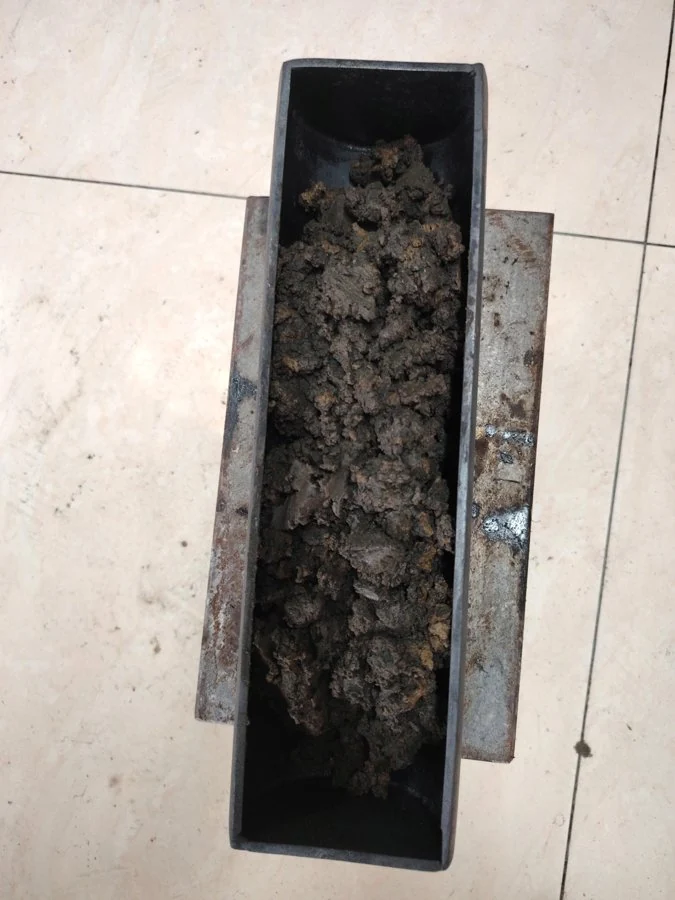
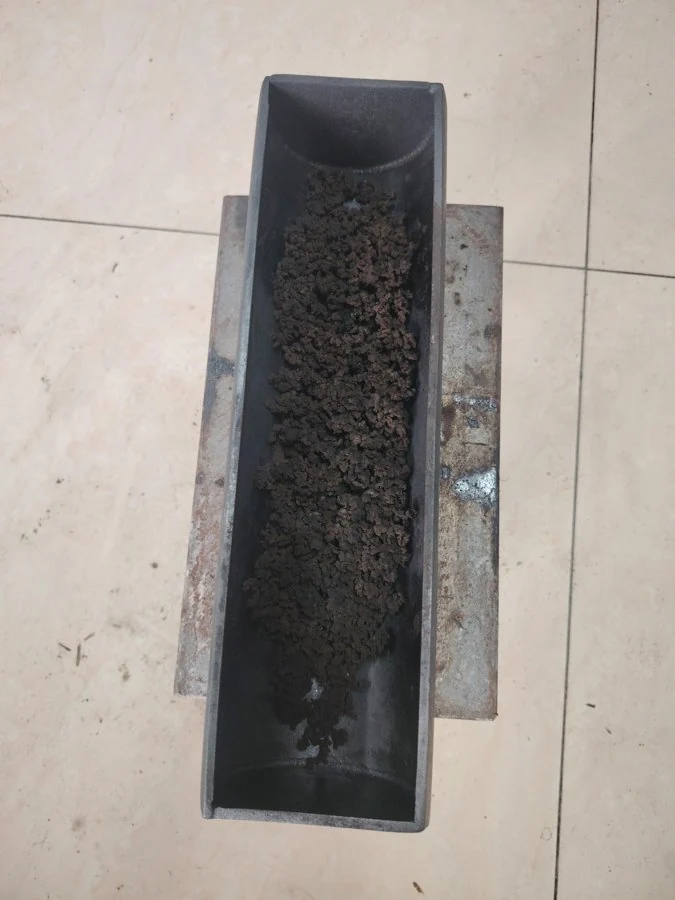
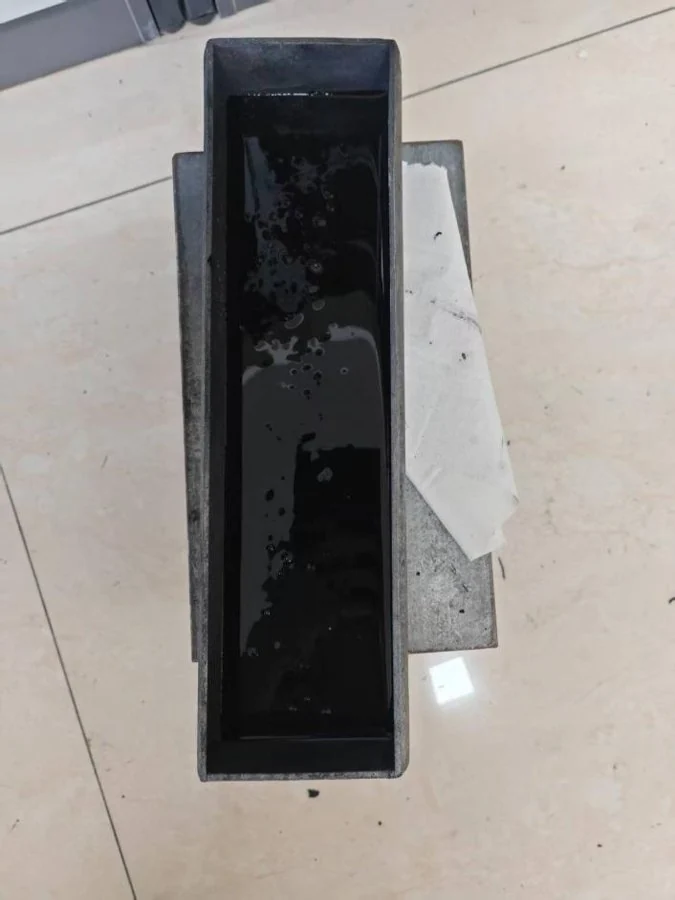
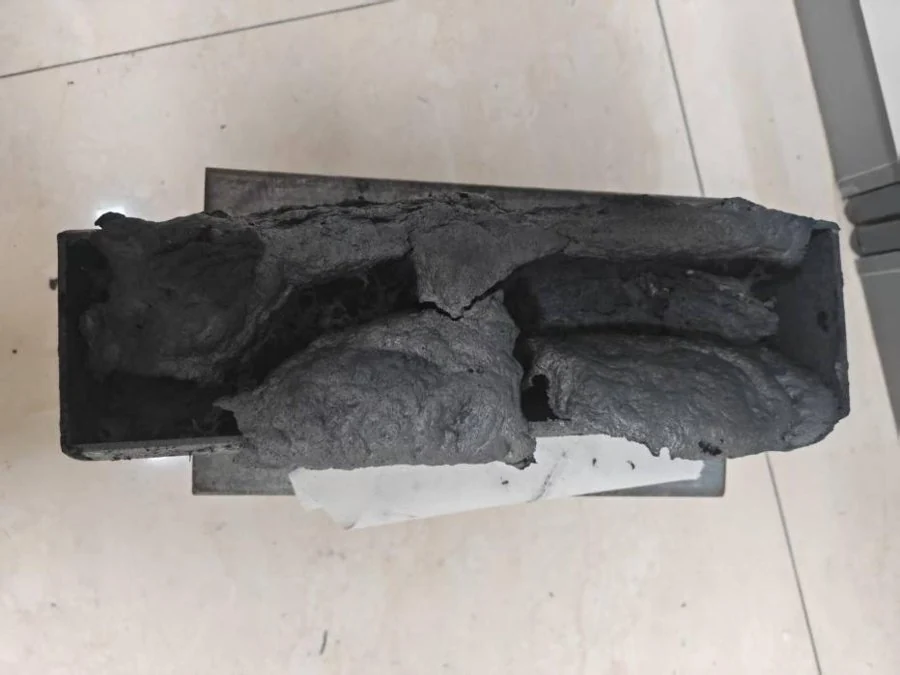
Domestic sludge contains organic and inorganic constituents from wastewater treatment; moisture and viscosity depend on its source and dewatering conditions. Copper-bearing sludge also varies in its nonmetal constituents. These two samples are not representative values applicable to sludge generally.
Measured feed moisture. Temperature, time and other test conditions differ.
02Drying load from moisture and water balances
Applying 81.35% wet-basis moisture to the 830 g domestic-sludge sample gives approximately 675.2 g water and 154.8 g dry solids at input. The 130 g residue may still contain moisture, so actual evaporation and dry-solids reduction cannot be established from this weight alone.
Water-removal heat demand includes heating and evaporation of water, heating of solids/equipment and losses with exhaust. Condensation heat recovery and heat-source temperature/availability must be considered; weight reduction cannot directly predict energy consumption.
Wet-basis moisture is water mass divided by total wet sample mass. Assuming the measured 81.35% represents the 830 g charge, water is 830×0.8135=675.205 g and dry solids are 830−675.205=154.795 g. These are calculations from feed moisture, not measurements of water remaining after carbonization.
Direct heating of high-moisture sludge requires heat to bring water to the specified state and evaporate it. Sludge/equipment heat-up and exhaust/radiation losses add to this requirement. Actual heat demand depends on inlet temperature, outlet conditions and heat recovery and cannot be derived from weight reduction alone.
Calculated from 830 g input and 81.35% wet-basis moisture. This is not the post-carbonization composition.
The same calculation for 830 g of copper-bearing sludge at 0.60% moisture gives 4.98 g water and 825.02 g dry solids. The moisture load is therefore very different despite equal charged weight. Dry solids include both organic and inorganic constituents, so their mass does not determine the decomposable fraction. Feed/residue composition analysis is needed to interpret the 86.75% reduction.
03Combining dewatering, drying and carbonization
Dewatering mainly separates water mechanically; drying removes moisture by heat or other means; carbonization thermally decomposes organics under restricted oxygen. Their sequence and necessity depend on feed properties, treatment objectives and available heat.
Process selection should consider existing dewatering outlet moisture, sludge viscosity, handling, powder formation after drying and downstream acceptance conditions. Added pretreatment must be assessed together with its electricity, heat and maintenance costs.
Conceptual flow. Required stages and equipment depend on feed properties and treatment objectives.
Mechanical dewatering separates part of the sludge water through filtration or pressing. A filter press produces dewatered cake according to sludge properties and operating conditions. Further dewatering may reduce the water sent downstream, but achievable moisture and chemical consumption vary by feed.
A low-temperature heat-pump dryer upstream of carbonization can adjust cake moisture before feeding the reactor. Target moisture should account for reactor feeding, powder formation, storage/transport and heat demand as well as the dryer itself. A single configuration is not suitable for every sludge.
Compare the overall balance of chemicals, electricity, heat, maintenance, residue treatment and handling rather than evaluating dewatering, drying and carbonization independently. Drying may adjust downstream load but also requires operation and maintenance, so each feed needs its own assessment.
Pretreatment water quantities can be estimated from inlet/outlet moisture assuming conserved dry solids. However, fines can enter the filtrate during dewatering and chemicals also affect the mass balance. Design measurements should include cake, filtrate and chemicals, comparing calculated and measured water removal. Returning filtrate or dryer condensate to existing wastewater treatment also requires a load assessment.
As sludge dries, adhesion may change and consolidated cake may become powder. Low-temperature drying trials should check shaping, handling, belt/feed-section adhesion and discharge dust as well as target moisture. Significant powder formation may require altered feeding, target moisture or alternative pretreatment. Stable supply to carbonization is part of dewatering/dryer selection.
04Analyzing and managing residue and off-gas
For metal-bearing feeds such as copper-bearing sludge, assess the distribution of metals and ash in residue. Depending on the intended use/disposal route, leaching tests may be necessary in addition to total concentrations.
Gas may contain feed-derived odor constituents, dust and other components as well as water vapor. Measure emissions and select treatment and safety measures for the actual feed and operating conditions.
Feed assessment may include wet-basis moisture, ash, organic indicators, heating value and elemental composition. For copper-bearing sludge, define relevant analyses for other potential metals, chlorine and sulfur according to the generating process.
Total content and leaching behavior of residue are different indicators. Assessing distribution into gas, collected dust and condensate helps select the process and receiving facilities. Analytical requirements and acceptance conditions depend on the material and destination.
Metal-bearing residues require both concentration analysis and any leaching properties required by the receiving route. Carbonization does not make metals disappear: distribution into solids, dust and gas must be measured. Condensate composition and discharge conditions also require confirmation.
For consultation, provide the sludge-generating process, quantity, current dewatering method, inlet moisture, existing equipment and residue destination. Composition and treatment-test data are useful for considering pretreatment/carbonization combinations.
Cost assessment should include outgoing sludge weight/rate and process electricity, heat, chemicals, maintenance and solid/liquid treatment. Reduction may lower hauling burden, while carbonization adds operating costs. These bench tests do not establish full-scale running cost or payback. Compare the same cost boundary for the existing and proposed processes using actual quantities and conditions.
Before testing, define which selection decision each measurement will support. Moisture informs drying load, composition informs gas/residue management, and handling tests inform continuous feeding. Purpose-specific measurements progressively narrow the installation conditions.