
Drying and Carbonization
COLUMN 15Wood and Plant-Waste Carbonization: Comparing Bamboo, Wood, Straw and Palm Fiber
A comparison of test conditions and weight changes for five plant-based feedstocks.
Contents of this article
01Feedstock properties and five trial results
Plant feedstocks such as wood residues, bamboo, straw and palm fiber differ in moisture, particle size, fiber length and ash according to origin and storage. Soil, metals and coatings are additional checks when selecting pretreatment and char uses.
Even within plant feedstocks, blockage during handling, drying behavior and char shape differ. Record sampling conditions and sample condition as well as the material name, and identify differences from the intended production feed.
| Sample | Moisture | Temperature / time | Before → after heating | Weight reduction |
|---|---|---|---|---|
| Straw pellets | 7.64% | 750°C / 30 min | 855 → 330 g | 61.40% |
| Palm fiber | 11.82% | 700°C / 30 min | 380 → 97.869 g | 74.25% |
| Bamboo chips | 6.56% | 200°C / 120 min → 600°C / 120 min | 610 → 155.096 g | 74.57% |
| Wood A5 | 9.77% | 500°C / 10 min | 130 → 40 g | 69.23% |
| Wood B | 10.31% | 550°C / 7 min | 185 → 50 g | 72.97% |
Based on as-fed weight, including evaporation. Different test conditions prevent a like-for-like performance comparison.
Bamboo used two-stage heating: 120 minutes at 200°C followed by 120 minutes at 600°C. The stated heating schedule including heat-up totals 360 minutes and is not a single-temperature test. Wood A5 was set to 500°C, but its documented heat-up time only covers reaching 450°C.
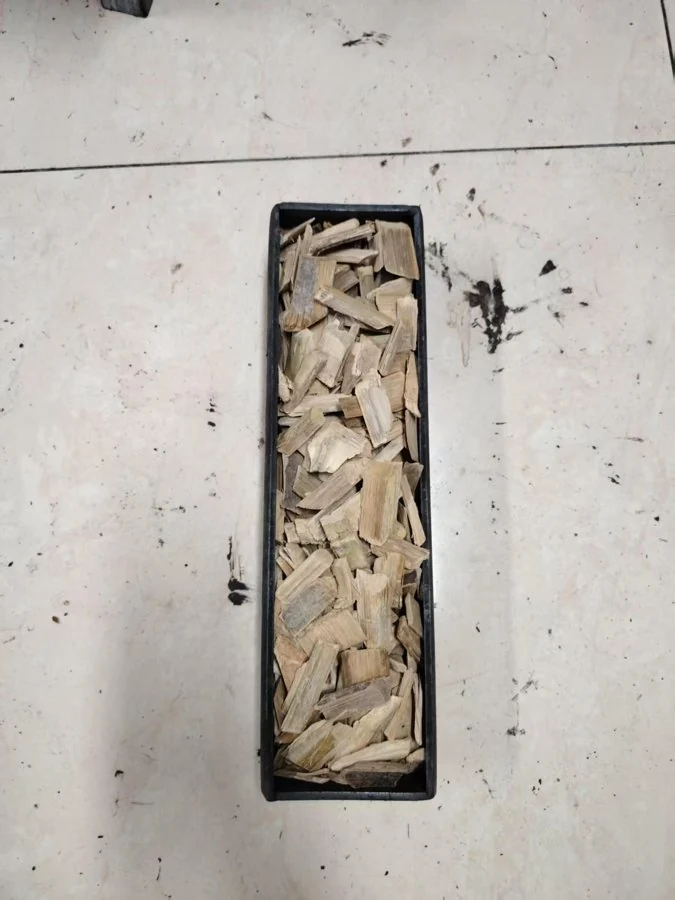
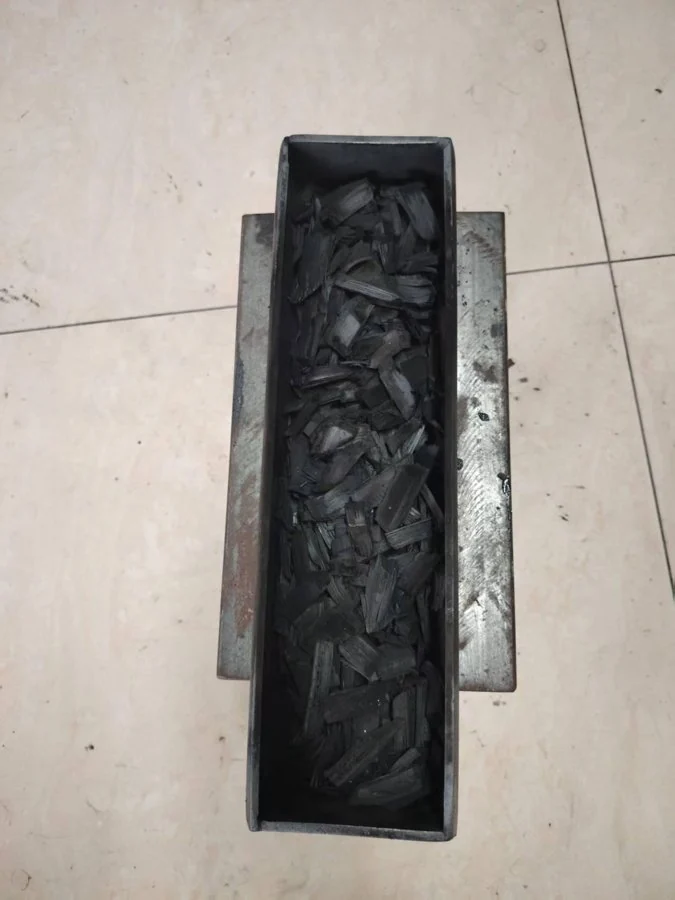
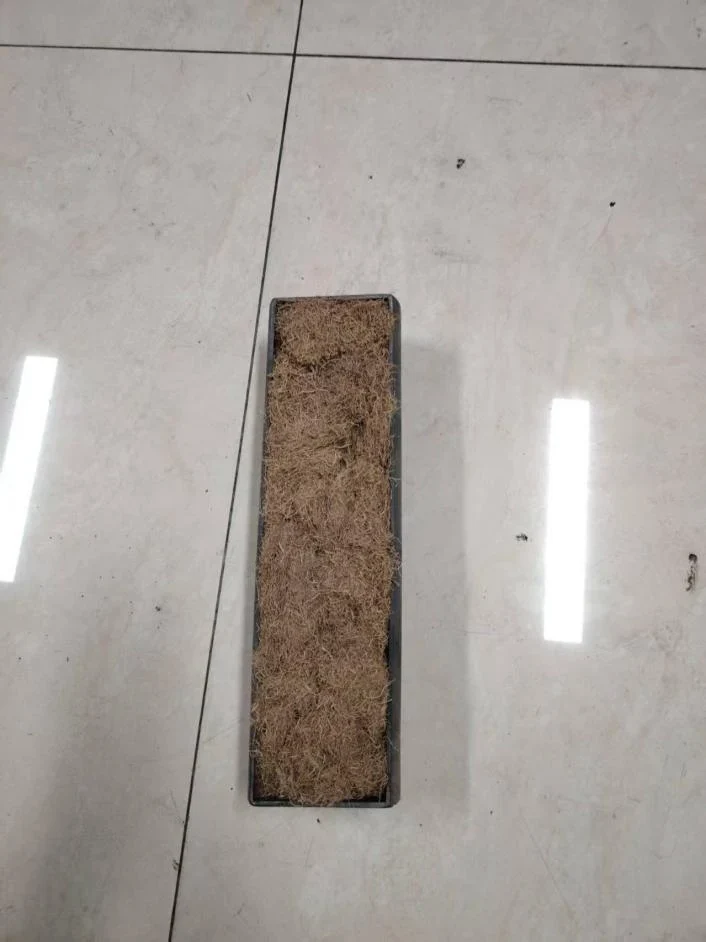
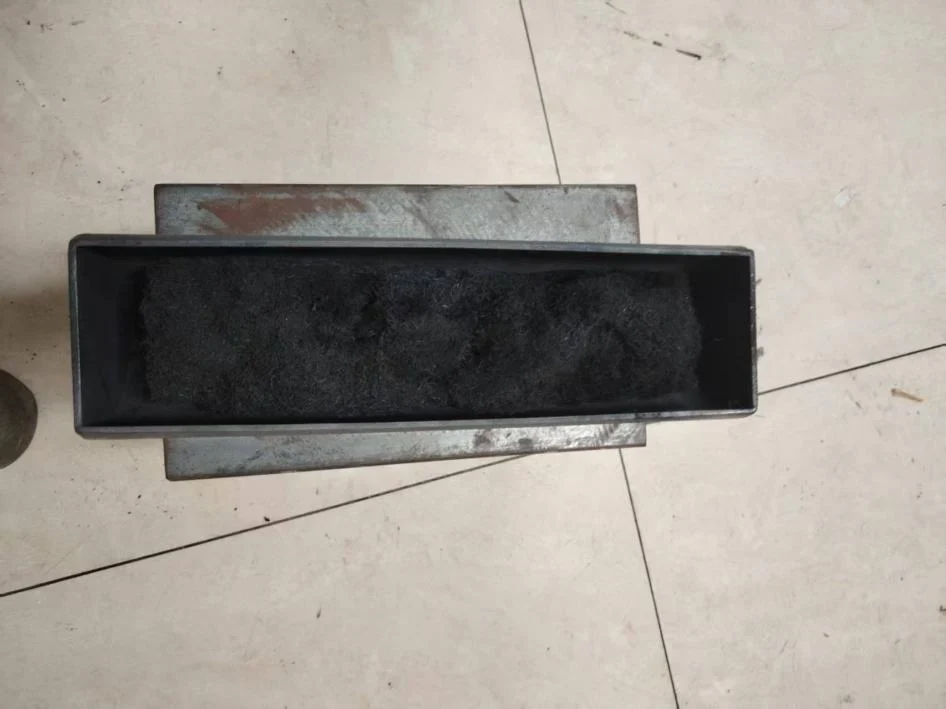
Straw pellets were tested at 750°C for 30 minutes, palm fiber at 700°C for 30 minutes, wood A5 at 500°C for 10 minutes and wood B at 550°C for 7 minutes. Bamboo held for 120 minutes at each of 200°C and 600°C.
Because feed types and moisture also differ, the table cannot establish how much raising temperature changes reduction. Temperature effects require tests on the same feed with other conditions controlled.
Wood particle size/species, bamboo shape, pellet formation and palm-fiber length/entanglement affect feeding. Soil, coatings or metal contamination require source checks and suitable pretreatment. Equipment selection should assess differences between test samples and the actual continuous feed.
Bamboo was heated from ambient to 200°C over 60 minutes, held for 120 minutes, heated to 600°C over 60 minutes and held for another 120 minutes. The stated heating schedule totals 360 minutes, excluding cooling. It must not be compared as a single-temperature/single-hold test.
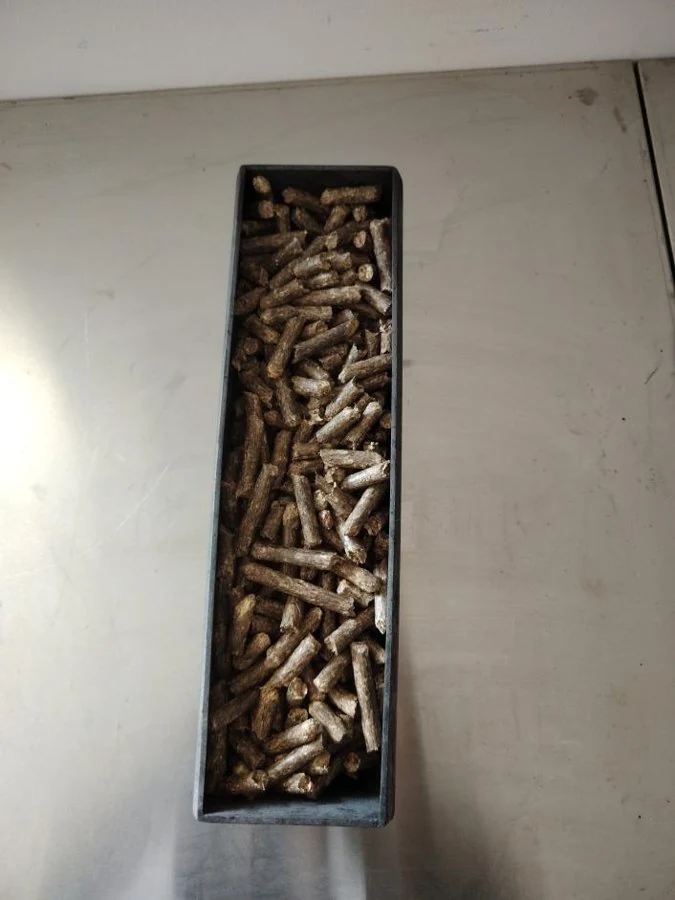
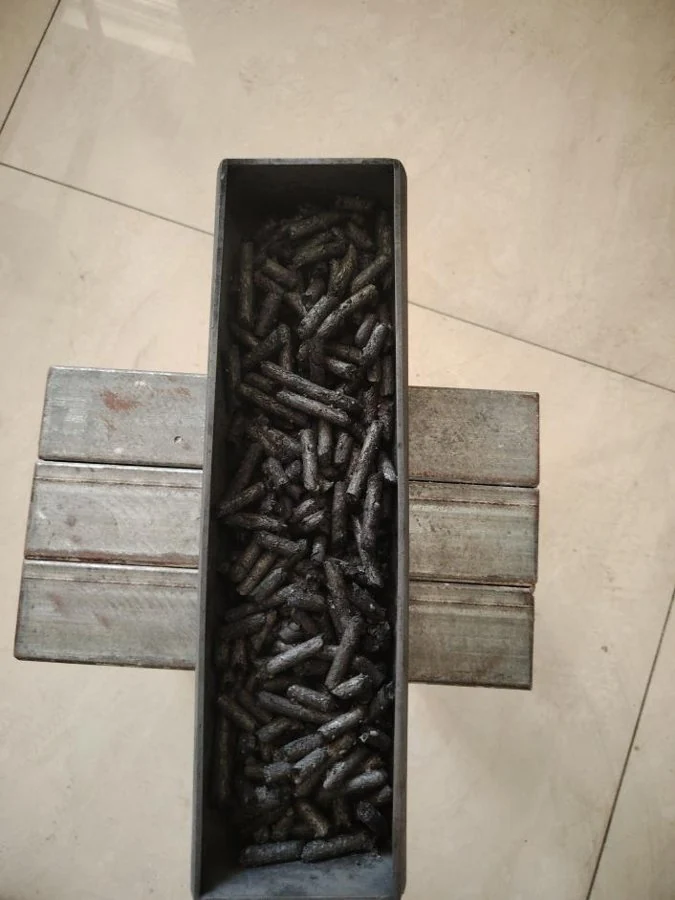
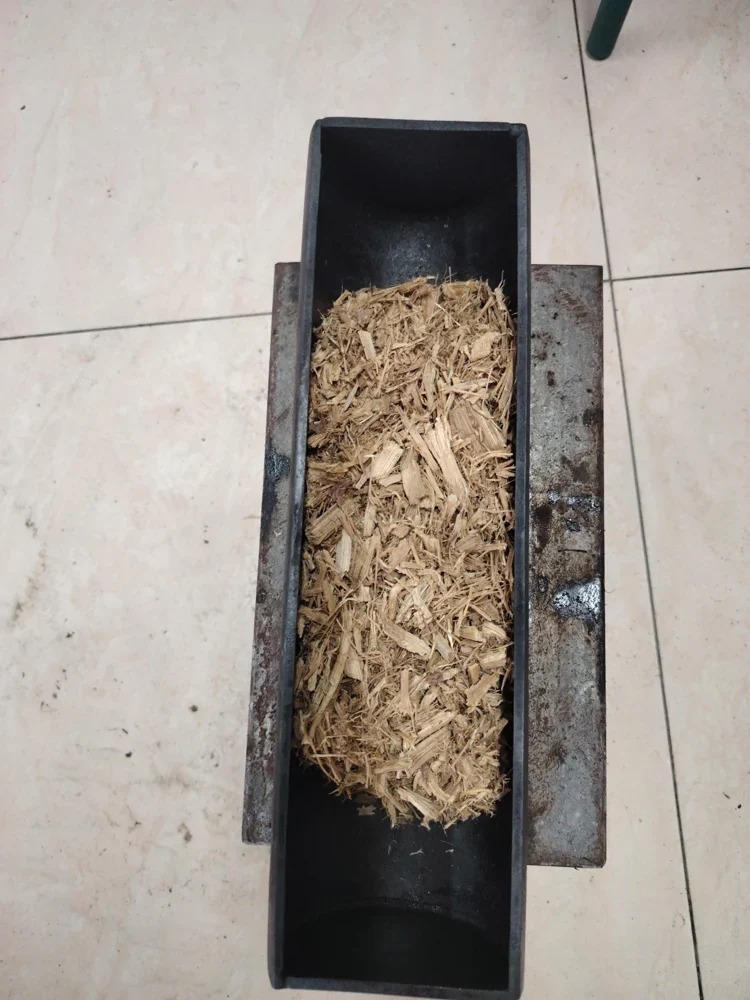
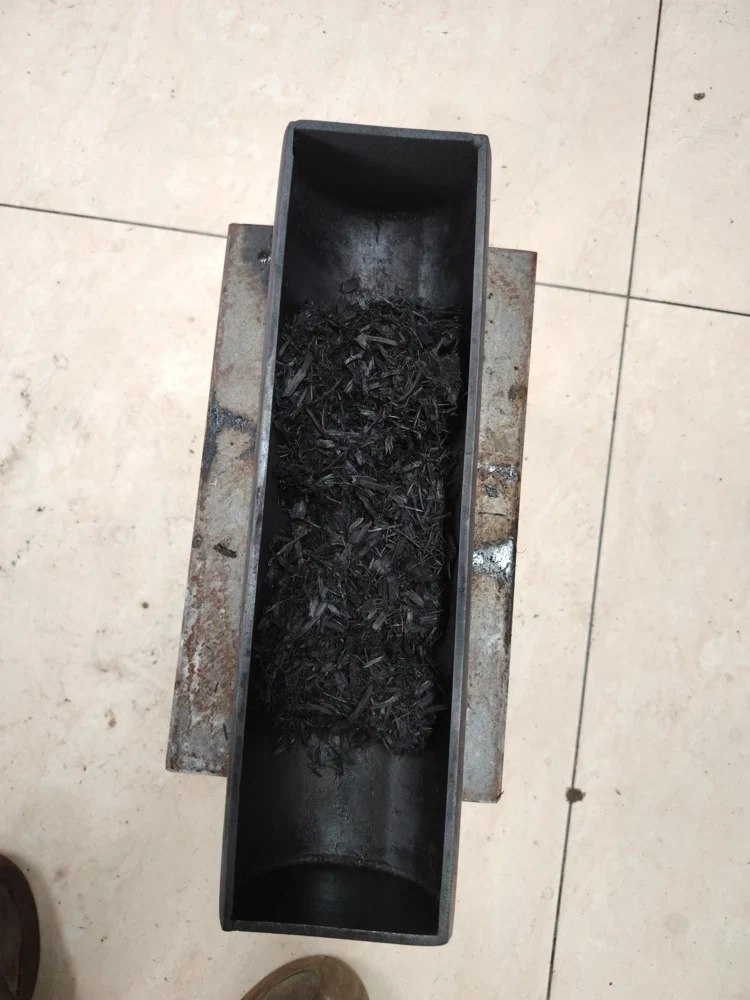
Feed moisture for each trial. Feed properties and test conditions differ.
Measured weight reductions were 61.40% for straw pellets, 74.25% for palm fiber, 74.57% for bamboo, 69.23% for wood A5 and 72.97% for wood B, based on wet input weight. Temperature/time conditions differ; these were not tests changing only feedstock. Similar bamboo and palm-fiber reductions do not imply equal results at equal heat input or processing time.
02Moisture, dry-basis yield and char quality
When feed moisture differs, reduction relative to wet input weight cannot establish how much solid remains relative to dry feed. Measuring both feed and char moisture enables dry-basis solids yield appropriate to the comparison objective.
Evaluate ash, volatile matter, fixed carbon and heating value on consistent bases. Fixed carbon from proximate analysis is distinct from carbon content from elemental analysis. Methods and wet/dry reporting bases must match.
For fuel or soil-related applications, appearance and weight reduction alone do not establish suitability. Measure relevant ash, carbon, heating value, constituents and hazardous substances, then check receiving specifications and applicable requirements.
Coatings, chemicals or contaminants can affect product quality and safety. Establish sample origin and contaminants before selecting an outlet.
High-moisture feed requires heat to evaporate water before or during early carbonization. Storage and seasonal moisture variation require assessment of ranges, not only averages. Dry-basis solids yield needs moisture measurements before and after treatment on a consistent basis.
Ash indicates inorganic residue after heating; volatile matter indicates constituents released under specified conditions. Fixed carbon from proximate analysis differs from elemental carbon. Different conditions or reporting bases prevent direct comparisons, so analytical methods should suit the intended application and be consistent.
Fuel evaluation requires heating value, ash, moisture, composition and the user's specifications. Soil-related use similarly requires composition, safety and fitness for purpose. Carbonization alone does not establish suitability for either application.
Char quality assessment should also consider particle strength, breakage, moisture uptake during storage and dust during transport. Meeting a heating-value specification may still require handling/storage adjustments. Where feed moisture or contaminants vary by season or supplier, establish resulting quality ranges and feed acceptance controls.
03Selecting equipment for feedstock properties
Long fibers can make feeding/transport unstable, while fine feed requires consideration of dust and collector load. Assess size, moisture, bulk density and contaminants when selecting feeding methods and crushing needs.
Carbonization temperature, heating rate, holding time and atmosphere affect product quantities/properties. Comparative tests should record sample mass/shape, temperature measurement location, atmosphere gas and cooling method to aid interpretation of differing feeds and conditions.
Equipment selection requires quantities and seasonal variation, moisture ranges, particle size/contaminants, site, heat sources, operating hours and residue dispatch methods. Wet feed may require dewatering or drying pretreatment.
These results support initial assessment. Continuous feeding, off-gas properties, energy demand and char use require further investigations with the actual feed.
Bulk density is mass per unit volume and affects hopper capacity and transport-equipment size. Low-density feed may require more volume for the same weight; assess actual packing as well as weight. Long fibers also raise entanglement and bridging concerns.
Continuous processing requires simultaneous assessment of mass/volume rates, feed variation, size and moisture. Dusty feeds require containment at handling, feeding and discharge; carbonization gases require composition-specific treatment. Trials representing continuous feeding complement bench results.
Feed equipment selection should consider volumetric as well as mass flow. Low bulk density increases the required conveying volume for equal mass flow. Compression and entanglement mean that static bulk density may not represent transport conditions. Test hopper discharge, feeder filling and blockage tendency with actual material to understand flow variation.
Record input rate, moisture, temperature, residence conditions and residue quantity together. Intermittent feeding may change thermal load, products and gas generation. Bench tests identify before/after changes, while continuous trials additionally assess stable feeding/discharge. Selection aims to define suitable acceptance and operating ranges for each feed, not rank materials as superior or inferior.
To assess repeatability, record representative sampling, storage and pretreatment. A shared material name does not ensure comparable feed condition. Define controllable production-feed conditions and assess suitability within that range.