Target sludge and solid content concentration
Please let us know to the best of your knowledge. You can also consult us regarding unspecified conditions.
DEWATERING SERIES
FILTER PRESS
A fully automated cycle, from filtration to cake discharge.
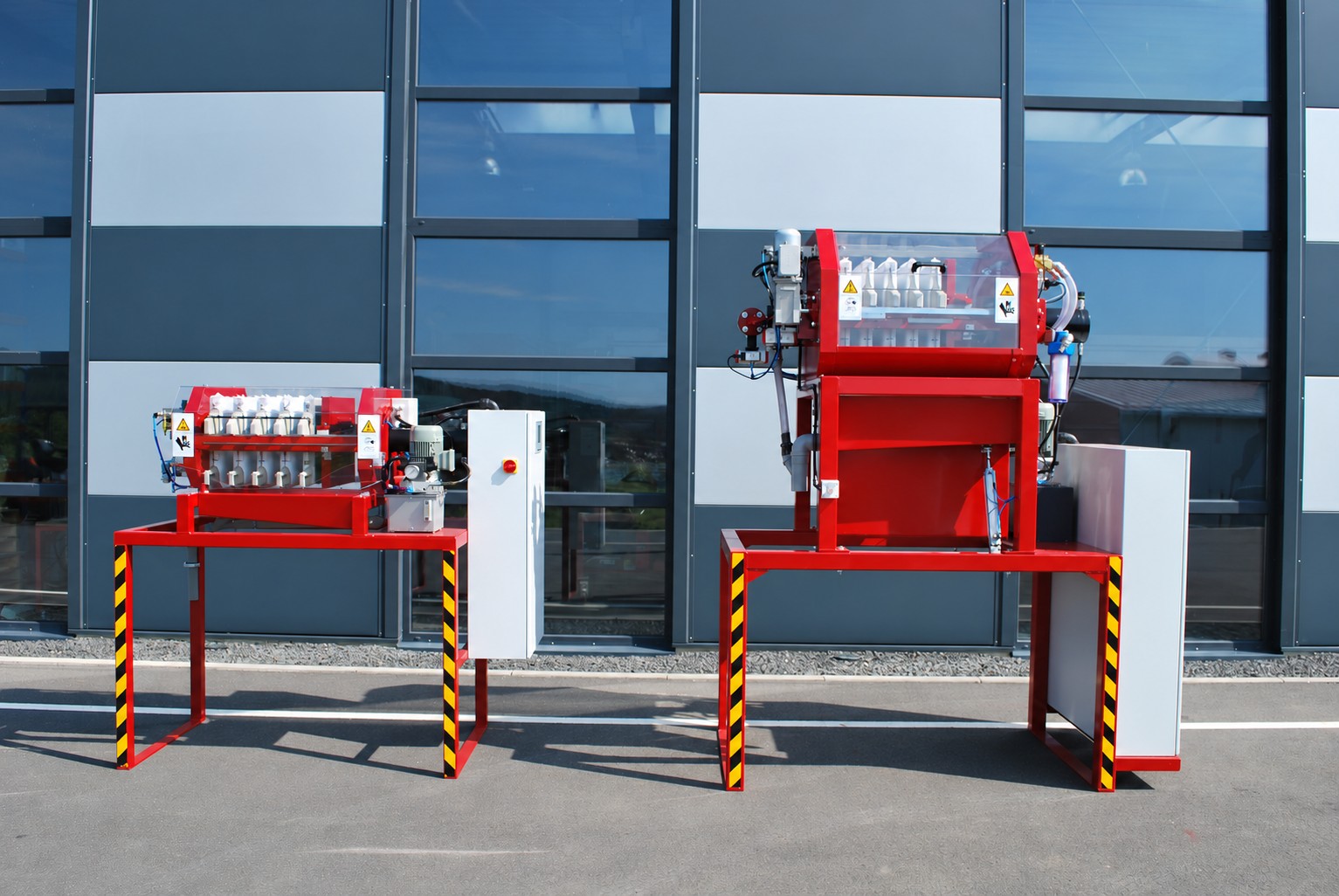
Sludge is pressure filtered, then the plates open and vibration assists cake discharge. The automated cycle helps reduce routine work. Choose from 11 models to suit your installation and washing requirements.
Examining sludge dewatering and volume reduction from the perspective of treatment conditions.
Consult about product selection and quotation →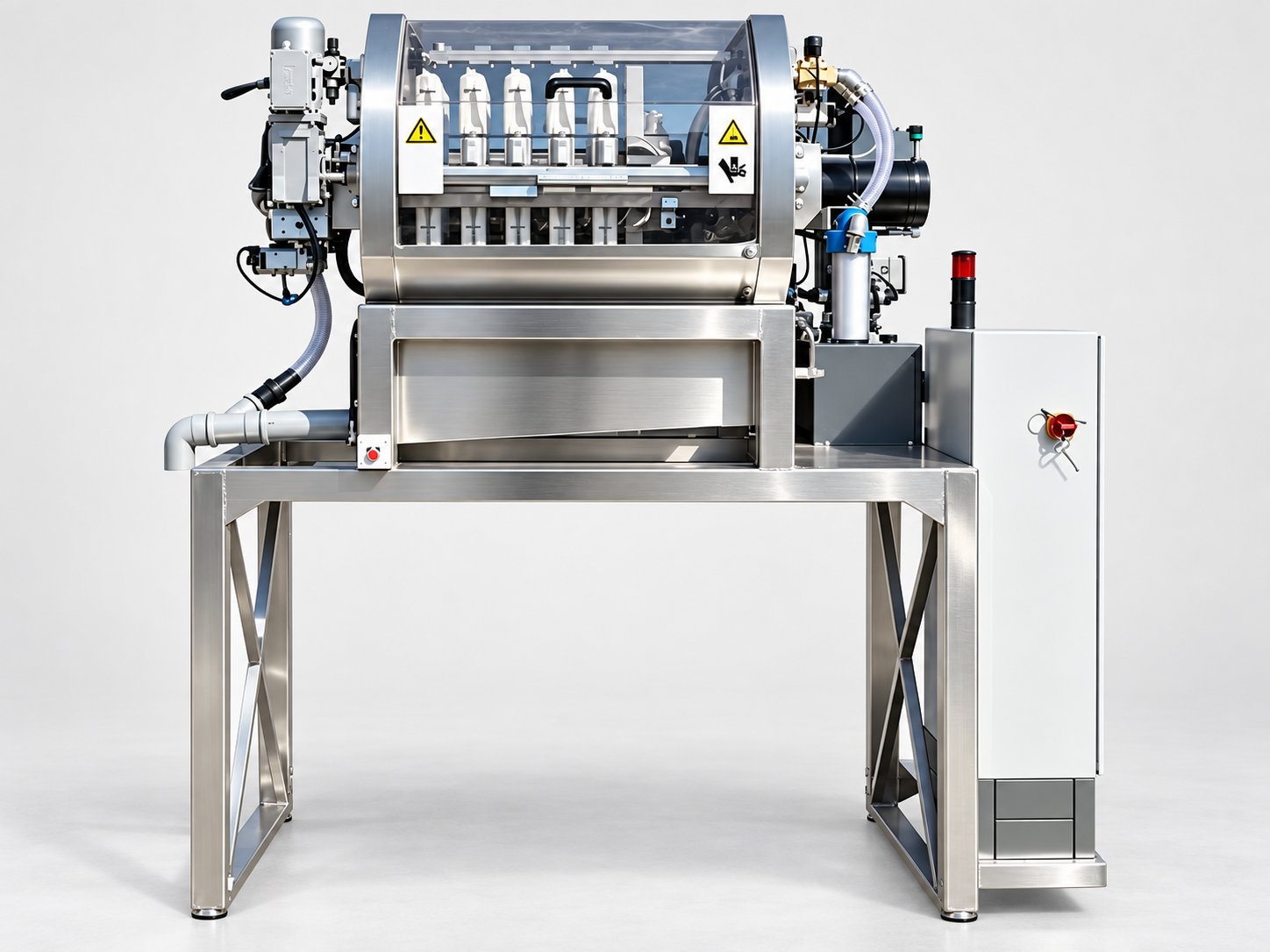
Product overview
The NRP and NMP series are filter presses that separate water from sludge through filter cloth to produce cake. Eleven models are listed, covering filtration areas of 1.2–16.5 m² and chamber volumes of 19–264.2 L. Compare candidates against the sludge characteristics, required throughput and available installation space.
The processing amount varies depending on sludge properties, solid content concentration, chemicals, filtration cycle, and operating time.
Consultation on introduction and selection
You can compare the filtration area, filtration chamber capacity, and daily capacity DS and consult with us about the model that suits your required processing volume and installation conditions.
Please let us know to the best of your knowledge. You can also consult us regarding unspecified conditions.
Please let us know to the best of your knowledge. You can also consult us regarding unspecified conditions.
Please let us know to the best of your knowledge. You can also consult us regarding unspecified conditions.
Please feel free to contact us even before the specifications are decided.
Consult about this product →PROCESS & STRUCTURE
The washing-equipped type includes a washing step. The items washed, timing and standard scope depend on the specification and should be confirmed. Cake release varies with sludge properties.
FEATURES
Automating sludge feed, filtration, plate opening and discharge can reduce routine work. Upstream and downstream operations, inspection and maintenance still need consideration.
After filtration, the plates open and vibration assists cake release.
Choose from 11 models, including compact units, according to throughput and installation conditions.
Washing can reduce cleaning work. Confirm the washing targets and equipment scope for the selected configuration.
Sludge is filtered at a normal pressure of 0.5–0.8 MPa to separate liquid and solids. Results vary with the sludge and operating conditions.
Compare filtration area, chamber volume and reference daily dry solids capacity to select a model for your conditions and operating hours.
Normal filtration pressure is 0.5–0.8 MPa. The normal hydraulic setting for plate closure is 20–22 MPa; the hydraulic unit maximum is 25 MPa. There is no additional post-filtration squeezing step. The parameter sheet specifies PPH plates, PA12 cloth and a design feed solids concentration of 1–10%.
TYPES
| Item | Without washing | With washing |
|---|---|---|
| Operation | Fully automatic | Fully automatic |
| Filtration | Pressure filtration | Pressure filtration |
| Cake discharge | Vibration assisted | Vibration assisted |
| Washing | No | Yes |
Please confirm the formal sales-model mapping, washing targets and standard equipment scope with us.
SPECIFICATIONS
Please check the candidates based on the filtration area, filtration chamber capacity, and reference daily consumption DS, and compare the dimensions and connection conditions. The table can be scrolled horizontally.
Showing 11 models
| model | Filtration area m² | Filter chamber capacity L | Daily DS: Inorganic kg-DS/day | Daily amount DS: Organic kg-DS/day | output kW | specifications | comparison |
|---|---|---|---|---|---|---|---|
| NMP400/5 | 1.2 | 19 | 922.1 | 136.6 | 0.75 | ||
| NRP500/5 | 1.8 | 29 | 1,409.5 | 208.8 | 2.2 + 0.25 | ||
| NMP500/5 | 1.8 | 29 | 1,409.5 | 208.8 | 0.75 | ||
| NRP500/8 | 3.2 | 50.8 | 2,466.6 | 365.4 | 2.2 + 0.25 | ||
| NMP500/8 | 3.2 | 50.8 | 2,466.6 | 365.4 | 2.2 | ||
| NRP630/8 | 5 | 80.4 | 3,906.1 | 578.7 | 2.2 + 0.25 | ||
| NMP630/8 | 5 | 80.4 | 3,906.1 | 578.7 | 2.2 | ||
| NRP630/12 | 7.9 | 126.3 | 6,138.1 | 909.3 | 2.2 + 0.25 | ||
| NMP630/12 | 7.9 | 126.3 | 6,138.1 | 909.3 | 2.2 | ||
| NRP800/15 | 16.5 | 264.2 | 12,842.1 | 1,902.5 | 2.2 + 0.25 | ||
| NMP800/15 | 16.5 | 264.2 | 12,842.1 | 1,902.5 | 2.2 + 0.25 |
There are no applicable models. Please change your search conditions.
Daily DS is dry solids mass per day, not feed volume or wet cake mass. Throughput and moisture depend on sludge, concentration, chemicals, operating hours and cycle time; values are references, not guarantees. Heights shown are basic unit heights. A support frame changes the overall height; allow for cake handling and maintenance. “—” reproduces a slash in the specification and does not mean zero consumption or no connection.
| model | L mm | W mm | H mm | supply port DN | outlet DN | Filter media port DN | backwash spray DN | Intake port DN | output kW | air consumption L/s | water consumption L/min |
|---|---|---|---|---|---|---|---|---|---|---|---|
| NMP400/5 | 2,300 | 900 | 2000 | 25 | 25 | 50 | — | 15 | 0.75 | 22.5 | — |
| NRP500/5 | 2,600 | 1,100 | 1600 | 25 | 25 | 80 | 25 | 15 | 2.2 + 0.25 | 22.5 | 60 |
| NMP500/5 | 2,300 | 1,000 | 2000 | 25 | 25 | 50 | — | 15 | 0.75 | 22.5 | — |
| NRP500/8 | 3,000 | 1,100 | 1600 | 40 | 40 | 80 | 25 | 15 | 2.2 + 0.25 | 40 | 105 |
| NMP500/8 | 2,600 | 1,000 | 2000 | 40 | 40 | 80 | — | 15 | 2.2 | 40 | — |
| NRP630/8 | 3,000 | 1,200 | 1800 | 40 | 40 | 100 | 25 | 15 | 2.2 + 0.25 | 40 | 105 |
| NMP630/8 | 2,700 | 1,200 | 2200 | 40 | 40 | 100 | — | 15 | 2.2 | 40 | — |
| NRP630/12 | 3,600 | 1,200 | 1800 | 40 | 40 | 100 | 25 | 15 | 2.2 + 0.25 | 40 | 165 |
| NMP630/12 | 3,500 | 1,200 | 2300 | 40 | 40 | 100 | — | 15 | 2.2 | 40 | — |
| NRP800/15 | 4,650 | 1,560 | 2400 | 50 | 50 | 100 | 25 | 15 | 2.2 + 0.25 | 70 | 210 |
| NMP800/15 | 4,200 | 1,350 | 2400 | 50 | 50 | 100 | — | 15 | 2.2 + 0.25 | 70 | — |
MODEL COMPARISON
If you check "Compare" in the specification table above, you can check up to 3 models side by side.
Please select the model to compare.
APPLICATIONS
Applications can be considered across a range of wastewater treatment processes, primarily for inorganic sludge.
These are potential applications, not evidence of installations or guaranteed performance. Suitability is assessed individually through testing and specification review, including sludge properties, oil, chemicals and hazardous substances.
SELECTION GUIDE
| Item | Our equipment | What to check |
|---|---|---|
| Operation | Fully automatic | Which stages are automated |
| Filtration | Pressure filtration | Whether additional squeezing is included |
| Cake discharge | Vibration assisted | Gravity, vibration, scraper or other method |
| Washing | Depends on type | Standard or optional configuration |
| Filtration pressure | Normally 0.5–0.8 MPa | Compare pressure at the same stage |
| Capacity | Depends on sludge and operation | Use the same sludge, target moisture and operating hours |
| Installation | Depends on model | Include frame, handling and maintenance space |
| Cost | Individual quotation | Scope of equipment, auxiliaries, freight and installation |
MODEL SELECTION
Please let us know the treatment target, sludge amount, Solids concentration, target Moisture Content, and installation conditions. Even if you don't have all the numbers, you can consult us with as much information as you can.
When combining both types of equipment, check the balance between the volume of sludge, sludge concentration, storage method, and dewatering capacity.
CONFIGURATION
We check not only the equipment itself, but also the peripheral equipment necessary for operation. The standard scope of delivery and additional configurations will be explained individually at the time of consultation.
Check the configuration of the filter plate, filter cloth, tightening mechanism, and protective cover.
Check how to wash the cake discharge aid, filtrate receiver, filter cloth and filter plate.
Check operating control range, supply pump, compressed air, and flush water supply conditions.
PRODUCT MATERIALS
This page lists the main specifications for all 11 models. If you require drawings or detailed configuration data, please contact us with the model you are considering and the conditions of use.
Inquire about product documentationFAQ
Organic sludge and inorganic sludge are considered. However, applicability varies depending on viscosity, oil content, particle size, filterability, etc. Please let us know the process of occurrence, analysis values, and current processing status.
A unit that expresses the amount of dry solids per day. It is different from the liquid volume (m³/day). The daily volume values on this page are reference specifications, and it is necessary to confirm the solid content concentration, sludge properties, treatment cycle, and operating time when converting to liquid volume and selecting a model.
The standard specification table is 55% inorganic sludge and 75% organic sludge. Actual moisture content varies depending on sludge properties, flocculation conditions, filtration conditions, etc. This value is not guaranteed for all processing targets.
Please let us know your wishes, such as automation of the operating process, cake discharge method, filter cloth cleaning method, etc. Check coverage and required configurations individually.
Combinations can be considered as a process for dewatering sludge after sedimentation and separation. We check the volume and concentration of sludge from the settling tank, storage method, and supply conditions and consider the configuration.
CONTACT
Please describe the material, sludge quantity, solids concentration, target moisture content and installation conditions. You can contact us with the information available even if not all figures are known. Selecting a model-specific inquiry button adds that model to your message.