Recycling heat
A configuration that combines dehumidification and reheating. Check and install the required power supply and surrounding environment.
DRYING SERIES
Low-Temperature Heat Pump Sludge Dryer
Sludge after dewatering,
Drying and volume reduction leading to the next process.
Estimate water removal from inlet and target moisture, wet sludge quantity and operating hours. Review the specifications and application examples for 5 models, then contact us to discuss a suitable configuration.
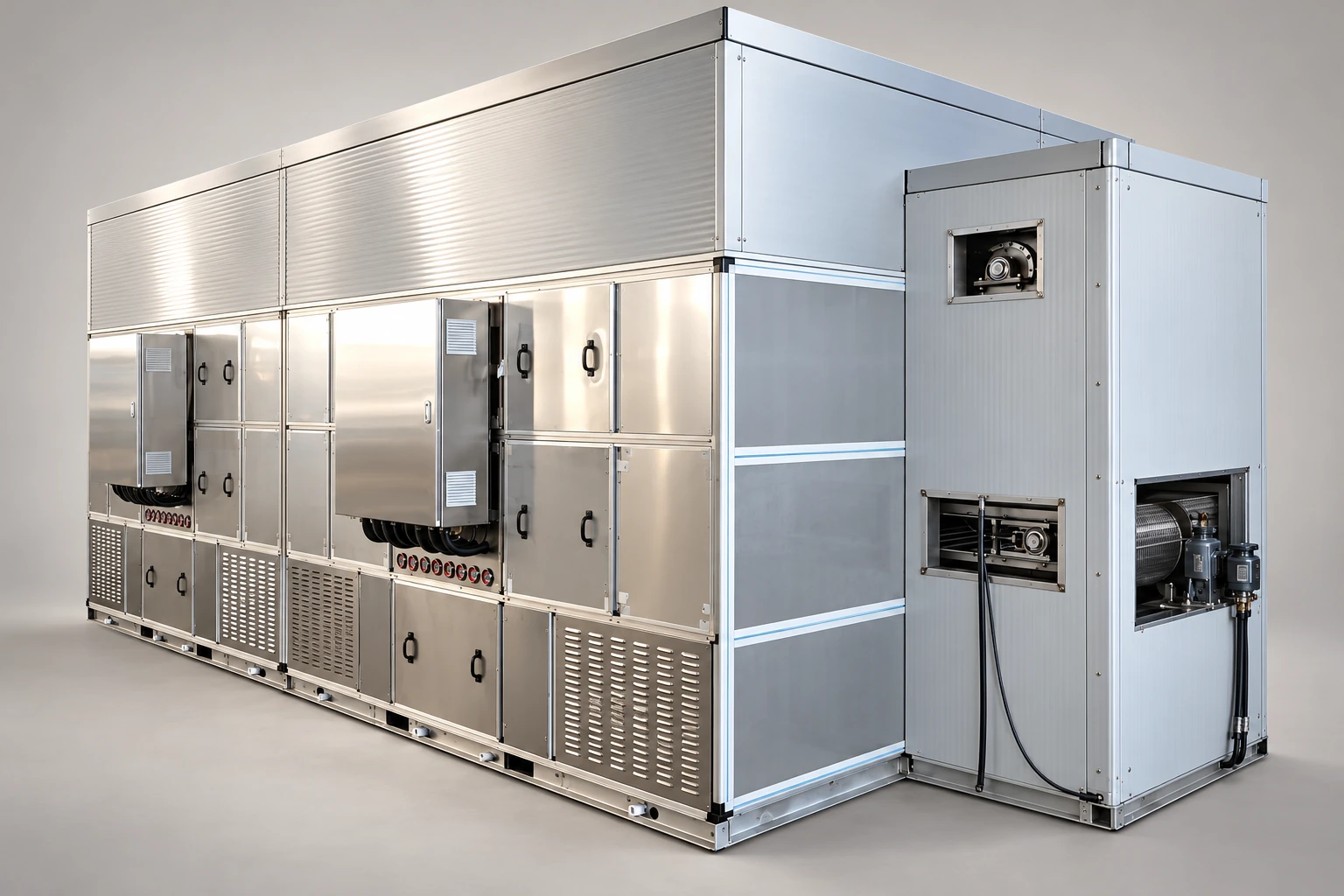
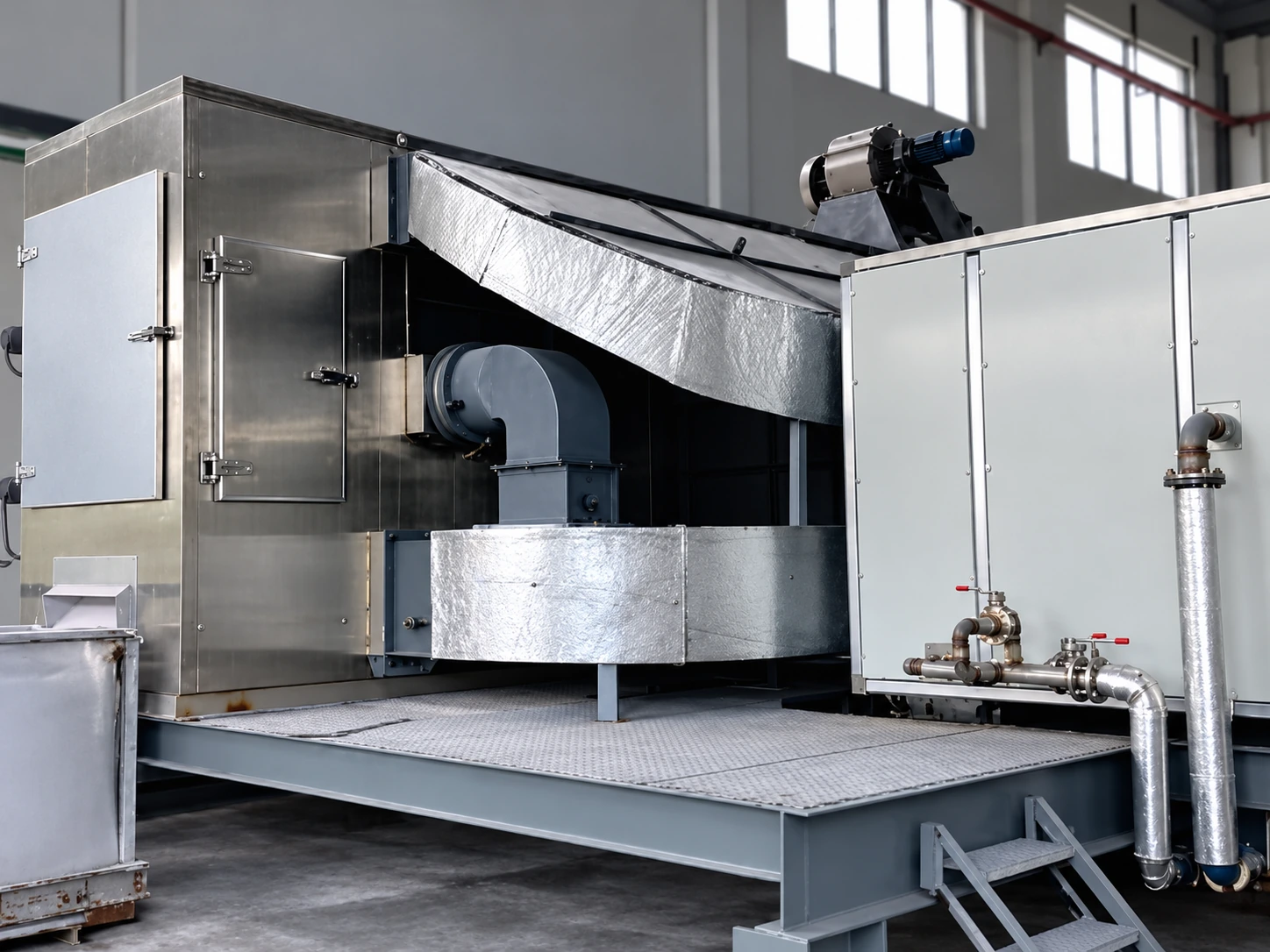
Equipment configuration example. Appearance and dimensions vary depending on model and configuration.
Product overview
The NTKS series dries dewatered sludge on a belt using recirculated air that is dehumidified and reheated by a heat pump. Installed after an existing dewatering stage, it can be considered for reducing the mass of sludge requiring transport or disposal, or for adjusting moisture content to meet downstream requirements.
Water removal amount is the amount of water removed. This differs from the input amount of wet sludge. The actual capacity and achieved Moisture Content will be confirmed based on sludge properties, forming conditions, and operating conditions.
PROCESS & STRUCTURE
Forms and supplies dehydrated sludge and transports it on a belt inside the drying room. The circulating air containing moisture is cooled and dehumidified, and the recovered heat is reheated and used for drying.
A configuration that combines dehumidification and reheating. Check and install the required power supply and surrounding environment.
Adjusts the formability and supply conditions of sludge and connects it to the drying process. Adhesiveness and foreign substances are also checked.
Controlled by monitor and PLC. We will also consider the conditions for cooperation with the transport equipment before and after.
SPECIFICATIONS
You can compare the amount of water removed per hour and installation dimensions. If you do not know the required amount of water removal, please use the calculation tool below.
Showing 5 models
| model | Water removal amount L/h | Standard water removal amount L/24h | output kW | External dimensions L×W×H mm | Weight t | Details | comparison |
|---|---|---|---|---|---|---|---|
| NTKS-1200MK | 50 | 1,200 | 16.8 | 3,950×2,090×2,530 | 1.6 | ||
| NTKS-2400MK | 100 | 2,400 | 33 | 4,400×2,390×3,400 | 2.5 | ||
| NTKS-4800MK | 200 | 4,800 | 58 | 7,100×2,390×3,400 | 5 | ||
| NTKS-7200MK | 300 | Special order item | 95 | 11,100×2,400×2,780 | 7.5 | ||
| NTKS-9600MK | 400 | 9,600 | 126 | 14,300×2,400×3,400 | 10 |
The 24-hour specification of NTKS-7200MK is a special order item. The output is a specification value and does not indicate actual power consumption or operating costs. Check the required margin and applicable conditions and make the final selection.
| cooling method | Air cooling |
|---|---|
| Refrigerant | R134a |
| Power supply | 380 V / 50 Hz |
| Indoor temperature | 10〜35℃ |
| Supply sludge Moisture Content | 50〜80% |
| After drying Moisture Content | 15〜55% |
| Molding method | Cut strip. Moisture Content guideline for molding conditions: 60〜83% |
| control | Monitor/PLC |
| configuration | assembly type |
The feed-sludge and forming-stage moisture ranges apply to different process stages. Do not determine suitability from these ranges alone; review sludge characteristics and pretreatment requirements. Please discuss voltage transformation and frequency compatibility for the installation's power supply, drainage, ventilation and maintenance access individually.
MODEL COMPARISON
By checking "Compare" in the specification table, you can check up to 3 models side by side.
SELECTION GUIDE
By inputting the input amount of wet sludge and the target Moisture Content, you can check the theoretical value of the weight after drying and the required amount of water removal. Including the operating hours on the 1 day, compare the amount of water removed per hour in the specification table.
The calculation assumes a constant dry solids mass. It excludes sludge-specific behavior, heat losses, start-up and shutdown, and moisture fluctuations. It does not establish model suitability, guaranteed capacity or the percentage reduction in disposal costs.
APPLICATION EXAMPLES
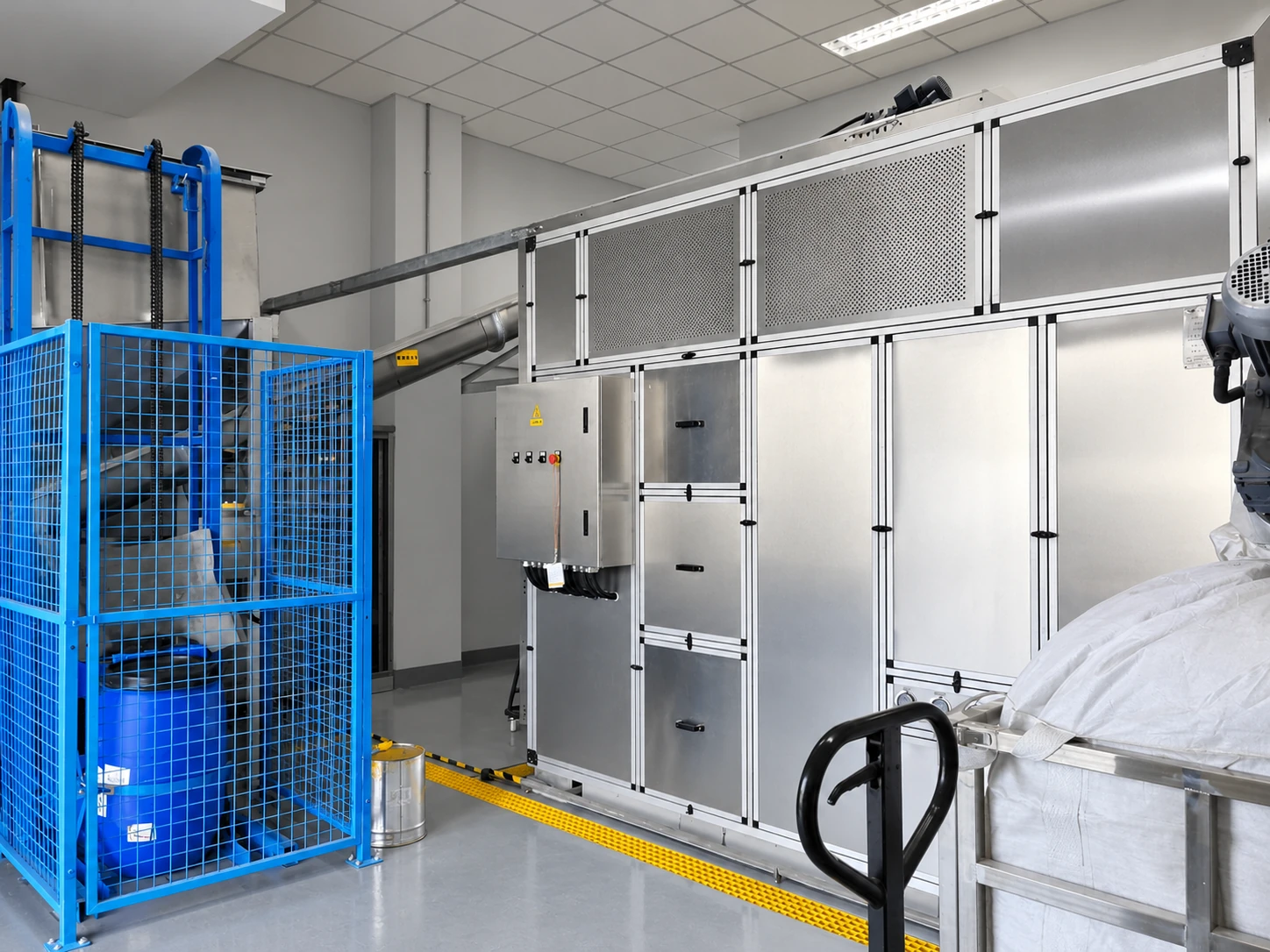
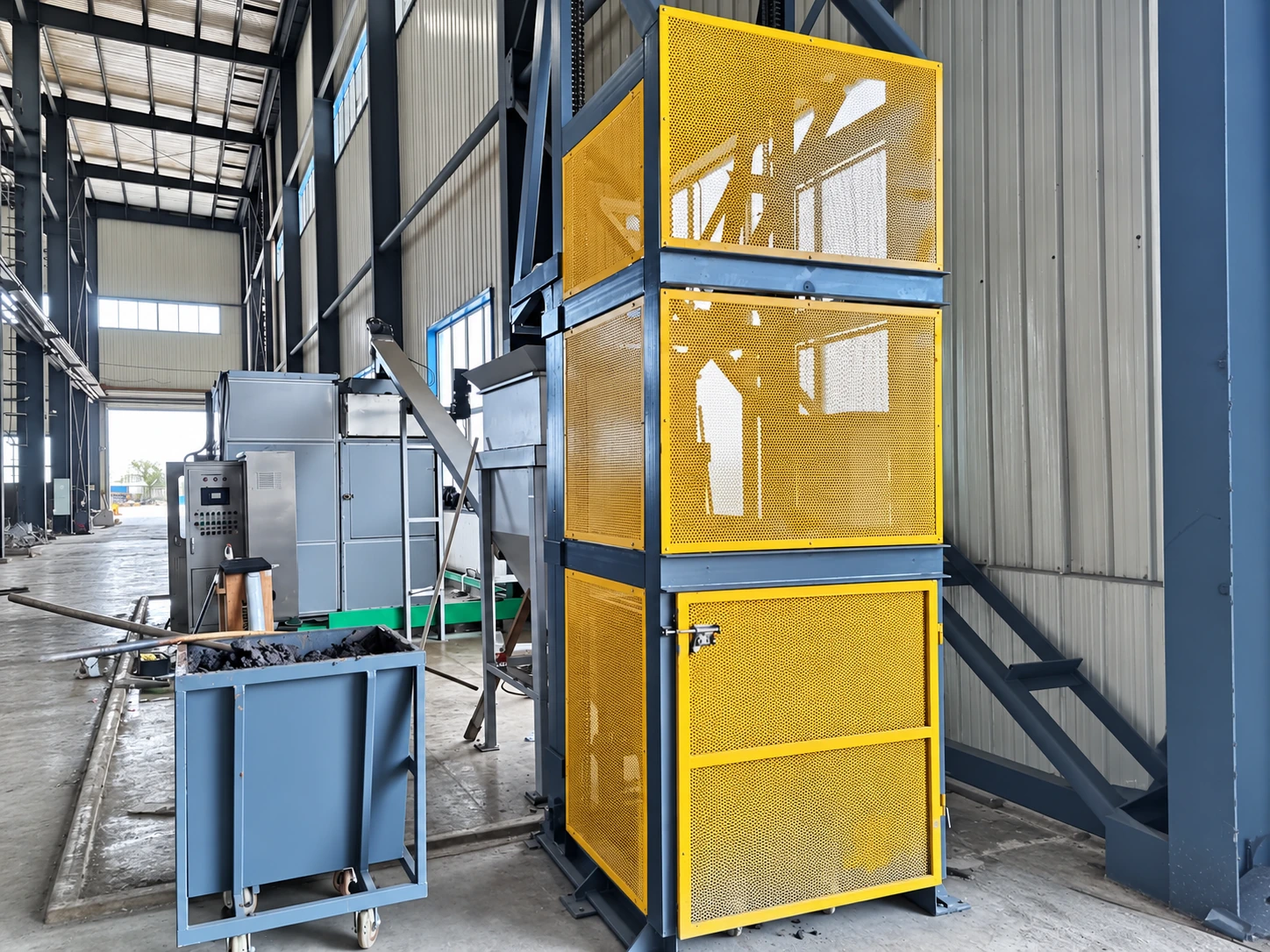
Examples of overseas applications such as sewage, pharmaceuticals, plating, and chemical processes. We will introduce the equipment configuration, input amount and Moisture Content conditions for each project.
| Target sludge | Wet sludge input amount | Entrance Moisture Content | Exit Moisture Content | process |
|---|---|---|---|---|
| sewage sludge | 40 t/day | 83% | 40% or less | Low temperature drying |
| Pharmaceutical sludge | 3 t/day | 85% | 30% | Low temperature drying |
| Plating sludge | 2 t/day | 75% | 30% | Low temperature drying |
| sewage sludge | 5t/day | 80% | 30% | Low temperature drying |
| Chemical sludge | Individual consultation | Individual consultation | Individual consultation | Deep dewatering + heat pump drying |
These figures illustrate conditions from individual projects. They are not guaranteed ratings for NTKS models or evidence of results achieved by the same model. Some examples include inlet moisture contents outside the standard specification range. Review the actual operating hours, pretreatment and system configuration for your sludge.
INSTALLATION & CONFIGURATION
Check sludge stickiness, fibers/foreign substances, and Moisture Content fluctuations. Consider pre-processing such as hoppers, conveyance, cutting strips, etc.
In addition to the device dimensions, check the delivery route, inspection space, room temperature, and power supply conditions.
Check the condensate treatment destination and odor/ventilation conditions including input and discharge areas.
We will consider Moisture Content and transportation methods that suit the purpose after drying, such as storage, transportation, incineration, and recycling.
You can consult us even if the conditions are not decided yet. Let's organize together from the information we understand.
Consult from processing conditions →FAQ
is different. Water removal amount is the amount of water removed, and sludge treatment amount is the amount of wet sludge input. Even if the input amount is the same, the required amount of water removal will differ depending on the inlet and outlet Moisture Content.
Organize the required amount of water removal from the wet sludge amount, inlet Moisture Content, target Moisture Content, and operation time. After that, select a model by checking the sludge properties, formability, installation conditions, and required margin.
Standard specification range is Moisture Content15 to 55% after drying. It does not guarantee the same attainment value for all sludge. Check according to the target sludge and post-process.
The feed sludge moisture content listed is 50-80%. Since pretreatment varies depending on moldability and adhesiveness, please let us know the current dewatering status, chemicals, and presence of foreign substances.
application examples include cases with individual preprocessing and configuration conditions. Conditions outside the standard specifications cannot be treated as common specifications or guaranteed values for the listed models.
listed power supply is 380 V / 50 Hz. We will check the voltage, frequency, and receiving capacity of the installation location, and provide you with individual information including transformation and configuration changes.
Check the condensate treatment destination and odor/ventilation conditions including the input and discharge areas. We will consider the equipment configuration according to the sludge components and site conditions.
24 time specifications are made to order. The amount of water removed per hour is listed as 300 L/h, but we will advise you based on the required operating conditions.
We will consider the weight reduction due to drying as well as the operating burden such as electricity, maintenance, and transportation. We cannot provide a uniform reduction rate because it depends on the sludge volume, Moisture Content, and disposal/transportation conditions.
This can be considered as an option for post-processing, but we will check the component analysis, standards of the recipient, and necessary processing conditions. Drying alone does not guarantee that it can be reused.
You can ask us about the properties of the sample and the items you want to check, and then discuss the test conditions and how to proceed. Even if you have not determined the necessary conditions, please contact us using as much information as possible.
The compared models and input processing conditions can be carried over to the inquiry section within the same browser. You can check and edit the content before sending.
PRODUCT MATERIALS
We will show you the specifications and equipment configuration for each model. Please contact us with the model and application you are considering.
CONTACT
We will advise you on the required amount of water removal and equipment configuration based on the amount of wet sludge, moisture content, and operating time.