Drying/Carbonization Equipment
COLUMN 07Sludge Dryer Water Removal and Electricity Use: Selecting a Low-Temperature Heat Pump Dryer
Calculate water removal and weight reduction from sludge throughput and moisture content. Learn how to compare kW, kWh and kWh per kilogram of water removed when choosing a low-temperature heat pump dryer.
When comparing sludge dryers, daily wet sludge input alone does not tell you the required drying capacity or electricity use. The amount of water the dryer must remove depends on moisture content before and after drying. This article covers the water balance, how to compare electricity use, and what to check when selecting a low-temperature heat pump dryer.
Contents of this article
- 01Calculate how much water the dryer must remove
- 02Worked example: moisture content and weight reduction
- 03Distinguish kW from kWh and compare the same measurement scope
- 04Low-temperature heat pump drying reuses heat from dehumidification
- 05Check dust, deposits and upstream dewatering
- 06Discuss the required water removal capacity
01Calculate how much water the dryer must remove
Feed throughput is the combined mass of water and solids. Water removal is the mass of water taken out during drying. Even with the same feed of 5 t/day, the required water removal changes with inlet moisture and the target outlet moisture. For selection, record typical and peak daily throughput, the inlet moisture range, the outlet target and the hours available for drying.
Use moisture content on a wet-mass basis, as the share of total sludge mass made up of water. If dry solids remain constant, calculate their mass from the inlet weight and moisture content. Divide that mass by the dry-solids fraction at the outlet to obtain the dried mass. The difference between inlet and outlet mass is the calculated water removal.
02Worked example: moisture content and weight reduction
Assume 5 t/day of feed sludge at 80% moisture, dried to 30% moisture. The calculation assumes that only water is removed and the dry-solids mass remains constant. It illustrates the calculation for these inputs. Equipment capacity and achievable moisture must be evaluated for the actual sludge.
| Item | Calculation | Result |
|---|---|---|
| Dry solids | 5 × (1 − 0.80) | 1.00 t/day |
| Dried sludge mass | 1.00 ÷ (1 − 0.30) | Approx. 1.43 t/day |
| Water removed | 5 − dried sludge mass | Approx. 3.57 t/day |
| Weight reduction | Water removed ÷ 5 × 100 | Approx. 71% |
Moisture content falls by 50 percentage points, while the total weight falls by about 71%. To estimate the hourly water removal needed, divide daily removal by the hours during which water can actually be removed. Exclude start-up and cleaning time if they fall within the scheduled shift. If sludge arrives in batches, consider peak receiving periods as well as average daily throughput. Use the calculator on the product page to evaluate other inputs.
03Distinguish kW from kWh and compare the same measurement scope
Kilowatts, or kW, measure power at a given moment. Kilowatt-hours, or kWh, measure electrical energy used over time. For example, an average draw of 10 kW over four hours uses 40 kWh. Where load varies, use metered energy over the relevant period instead of estimating from rated power or the electrical supply capacity.
Calculate electricity use per kilogram of water removed by dividing metered kWh by the kilograms of water removed during the same period. Check whether feed and discharge equipment, dust collection, start-up and standby are included. Also agree whether water removal is calculated from sludge weights and moisture contents or measured as collected condensate. For condensate measurements, moisture lost through ventilation and any mixing with wash water affect the balance.
Design water-removal capacity and stated operating power can be used for a preliminary estimate on a consistent time basis. After installation, record metered electricity use, inlet and outlet weights and moisture contents, and operating hours over the same period. Compare kWh/kg only after checking that the inlet and outlet conditions and metering scope are comparable.
04Low-temperature heat pump drying reuses heat from dehumidification
In a recirculating system, air picks up moisture as it passes through the drying chamber. Cooling the moist air condenses water for collection. The heat pump transfers heat from the cooling and dehumidification side to the heating side. The dried air is reheated and returned to the chamber. Recirculating air and heat can reduce losses associated with exhausting heated air.
Compressors and fans still consume electricity. As some sludges dry, the remaining water becomes harder to remove. A lower outlet moisture target can then extend operating time and increase energy use. Set the target based on conveying, storage and the receiving facility’s requirements, then evaluate the required water removal and electricity use at that target.
05Check dust, deposits and upstream dewatering
Review how the sludge is generated, its composition and particle size, its tendency to stick, and how it breaks up after drying. Inorganic or ceramic-process sludge prone to forming fines may leave deposits inside the dryer or release dust during discharge, conveying and container changes. A moisture content of 30% alone does not determine dust generation. Particle characteristics, drying conditions and impacts during transfer all matter. Test representative sludge and assess enclosure, dust collection, inspection and cleaning arrangements as part of the system design.
Mechanical dewatering with a filter press or similar equipment can reduce the drying load when the same dry-solids throughput and outlet moisture target are maintained. For batches of cake, consider a buffer hopper, metered feeding and cake breaking where required. Assess dewatering time and cake handling alongside the dryer load.
06Discuss the required water removal capacity
KISEI SHOJI can help estimate the required water removal and select a low-temperature heat pump sludge dryer based on feed rate, moisture range, outlet target and operating hours. If a dewatering unit is already installed, share the cake quantity, measured moisture and discharge frequency. If dust or deposits are a concern, we can review the sludge characteristics and how the dried material will be handled.
Related article How a Low-Temperature Heat Pump Dryer Works: Closed-Loop Dehumidification Compared with High-Temperature Drying
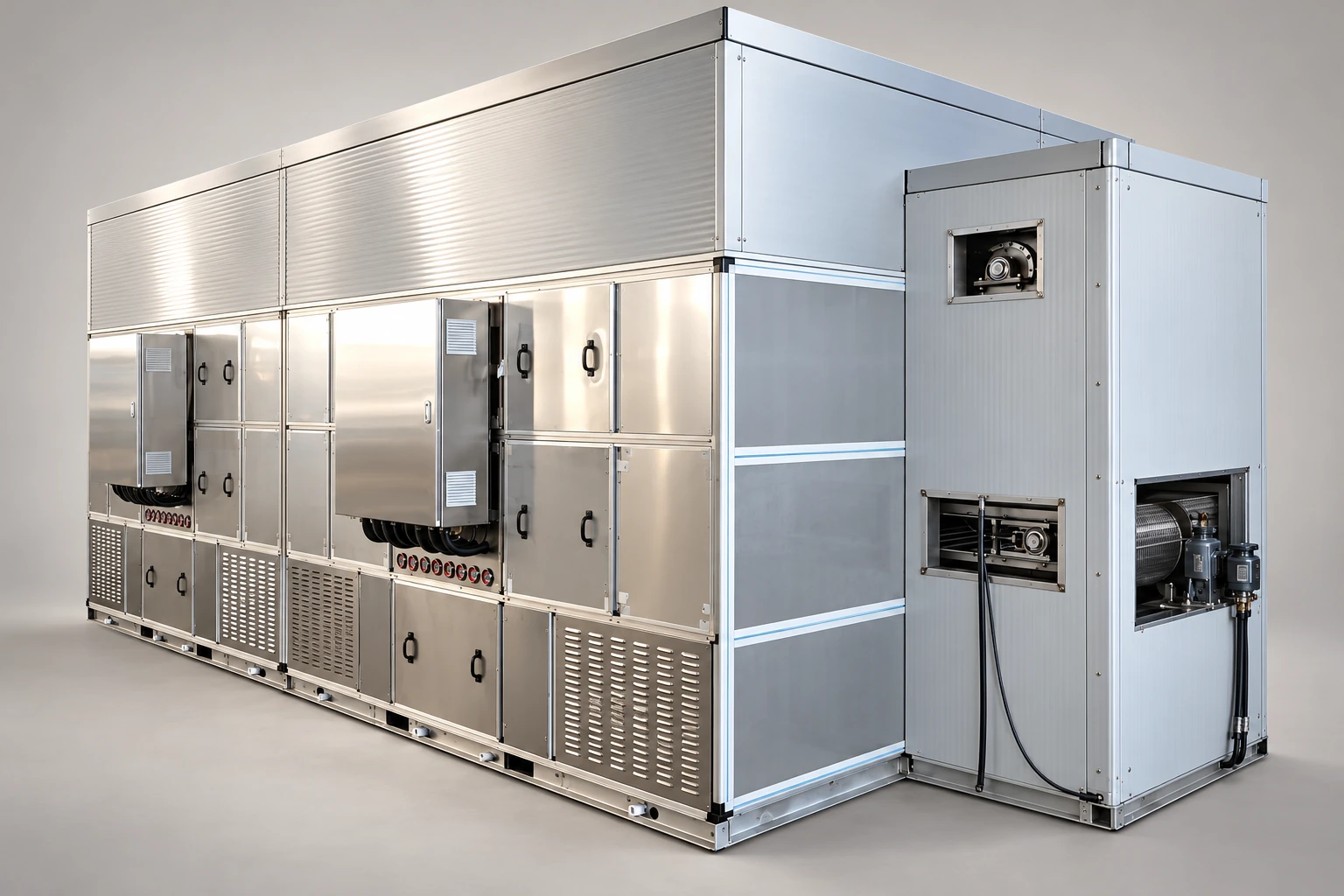
Equipment shown for reference.