Equipment selection/comparison
COLUMN 06Filter Press Replacement: Matching Process Requirements and Installation Space
Plan a filter press replacement by checking existing operating conditions, filtration and hydraulic closing pressures, installation clearances, delivery access and changeover downtime.
When replacing a filter press, starting with the same model or footprint may solve age-related problems while leaving bottlenecks or access constraints in place. Record how the current installation runs, then define the required throughput, the equipment you plan to retain, and the time available for the changeover. This article explains how to narrow down replacement options using both operating and installation requirements.
Contents of this article
- 01Define what the replacement needs to solve
- 02Record the installed equipment and actual operating conditions
- 03Distinguish filtration pressure from hydraulic closing pressure
- 04Compare the footprint and the space needed to operate
- 05Plan the changeover around available downtime
- 06Discuss replacement options using drawings and operating records
01Define what the replacement needs to solve
Common reasons include more frequent downtime from oil leaks or failures, difficulty sourcing spare parts, insufficient capacity after a production increase, labor-intensive cake discharge or washing, and space restrictions after a layout change. If treatment falls behind, find out whether the feed tank fills up while filtration is still running or whether cake removal delays the next cycle. Each points to a different part of the installation to review.
Record how often the problem occurs and how much downtime it causes in a day. Define the throughput, operating hours and cake condition required after replacement, covering both typical and peak days. If production is expected to increase, list current and future requirements separately so the equipment can be sized against the appropriate case.
02Record the installed equipment and actual operating conditions
A nameplate photo and the equipment specification identify the manufacturer and model. In addition to rated values, share actual operating pressures and cycle records, including time spent waiting for upstream or downstream equipment. These help assess whether a new configuration can reproduce the required operating conditions.
| Item | Information to provide |
|---|---|
| Manufacturer and model | Nameplate photo, specification and modification history |
| Sludge properties | Source process, organic or inorganic type, solids concentration and variations |
| Daily throughput | Typical and peak feed. Specify whether each figure is volume, wet mass or dry solids. |
| Filtration and cycle time | Filtration time and total cycle time, including discharge and washing |
| Filtration pressure | Actual feed-side pressure, measurement point and stage of the cycle |
| Cake moisture | Measured moisture and the target after replacement |
| Installation space | Available width, depth and height, support frame dimensions and working clearances |
| Delivery route and interfaces | Door and passage dimensions, route drawing and piping, conveying and power connection points |
Include the sampling date and measurement method for cake moisture. If the sludge changes with the production process, provide a representative value and the observed range. For pressure readings, record which gauge was read and at what stage, separately from the specification values.
03Distinguish filtration pressure from hydraulic closing pressure
Filtration pressure is the pressure on the sludge feed side, where the pump feeds the chambers for filtration. Hydraulic closing pressure is the pressure in the hydraulic circuit that holds the plates closed. Both are expressed in MPa, but they refer to different circuits and functions. One example specification for our filter presses is 0.5–0.8 MPa filtration pressure and 20 MPa hydraulic closing pressure. The 20 MPa figure applies to the hydraulic circuit. Check the formal specification for the selected model to confirm allowable pressures and operating conditions.
A model rated for a higher filtration pressure than the installed unit may be worth considering. If tests with representative sludge confirm the required daily throughput and cake condition, a smaller model may be feasible. The effect of pressure depends on the sludge. Test within the candidate model’s operating limits and verify the feed pump and piping specifications. For capacity assessment using filtration resistance and cycle time, see Understanding Filter Press Capacity.
04Compare the footprint and the space needed to operate
The existing press reflects the throughput and surrounding layout at the time of installation. For a replacement, use current daily throughput and available operating hours to reconsider the orientation of the press, pump and control panel positions, and cake collection arrangement. A smaller press can still require the same floor area if access for maintenance, parts removal or container changes is constrained. Overlay both equipment layouts and their working clearances on the same site drawing.
Check doorway width and height, turning space, overhead beams, lifting points, and floor or support frame conditions. Review removal and delivery routes separately, since piping or partitions may have been installed after the original press arrived. If retaining the feed pump, filtrate piping or cake conveyor, show connection positions and sizes, discharge heights and control interlocks on the drawing.
05Plan the changeover around available downtime
Allow for removal, installation, piping, electrical connections and commissioning. If sludge continues to accumulate while the press is out of service, available storage and temporary treatment arrangements determine how long the shutdown can last. Agree early on which piping will be retained and who is responsible for on-site work so proposed scopes can be compared.
During commissioning, verify daily throughput and cake moisture, discharge into the existing receiver, and coordinated startup and shutdown with surrounding equipment. Agree on representative test sludge and acceptance checks before ordering to make the criteria clear.
06Discuss replacement options using drawings and operating records
KISEI SHOJI can review nameplate details, operating records, installation drawings and site photos to help select a filter press and tailor its configuration to the available space. If the model or sludge analysis is still unknown, share why you are replacing the unit, an estimate of daily throughput and the available space. Include any equipment you plan to retain and the expected shutdown window.
Related article Combining a Filter Press with a Low-Temperature Heat Pump Dryer for Sludge Treatment
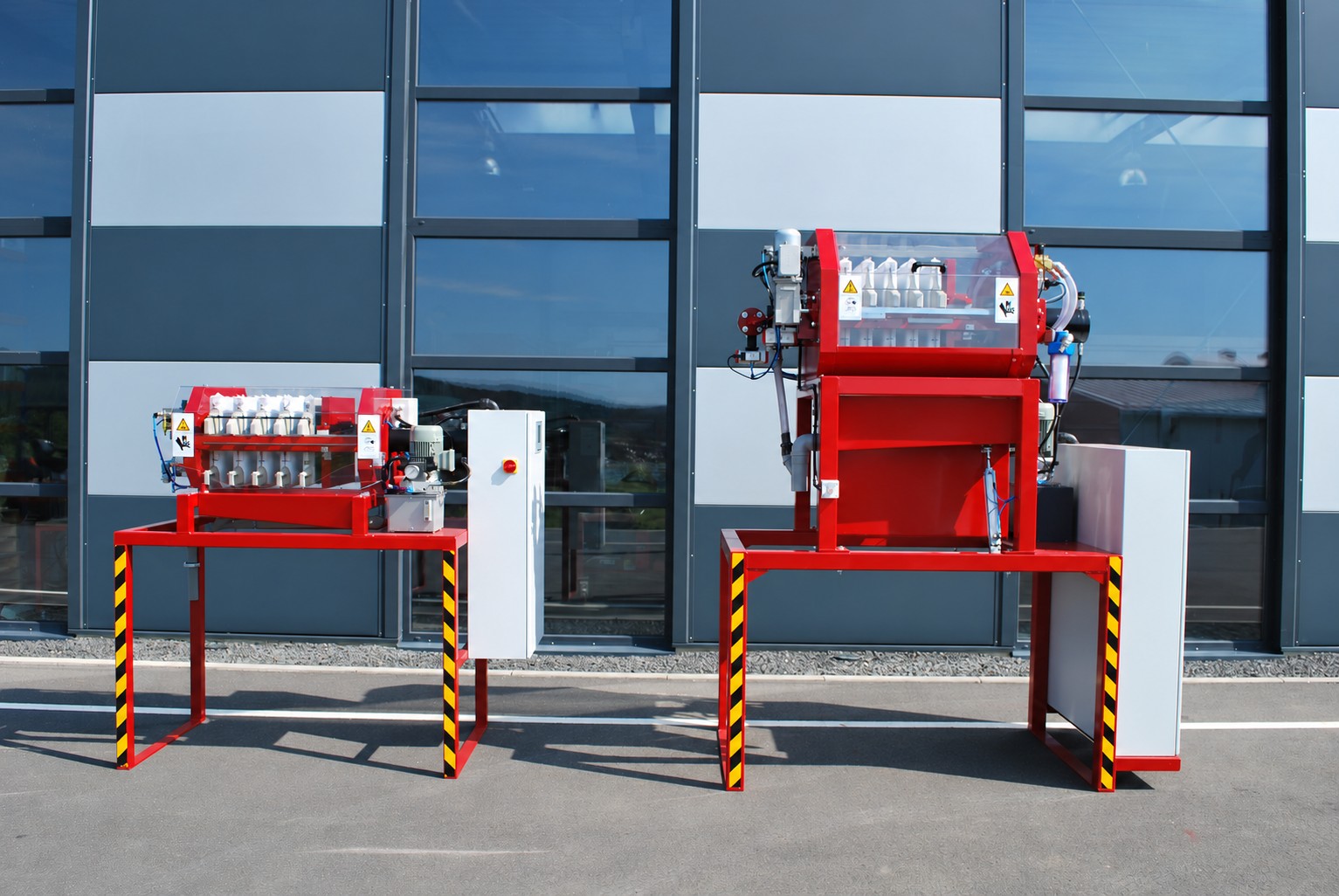
Equipment shown for reference.