
Drying/Carbonization Equipment
COLUMN 10How a Low-Temperature Heat Pump Dryer Works: Closed-Loop Dehumidification Compared with High-Temperature Drying
See how closed-loop air reheating, cooling and heat recovery work, how to read supply and return temperatures, and how to compare drying methods.
Contents of this article
01How closed-loop dehumidification works
Heated circulating air picks up moisture evaporated from the sludge. When the humid air is cooled below its dew point, some of the water vapour condenses. The condensate drains out, and the dehumidified air is reheated and returned to the drying chamber.
The refrigerant absorbs heat on the cooling side. After compression, it releases heat to the circulating air on the heating side. This arrangement reuses heat recovered during condensation. Air temperature, humidity and airflow all affect heat and moisture transfer.
Heated air enters the chamber → moist air returns from the sludge bed → cooling separates condensate → dehumidified air is reheated and returned to the chamber
02Air path and temperature readings in the NTKS series
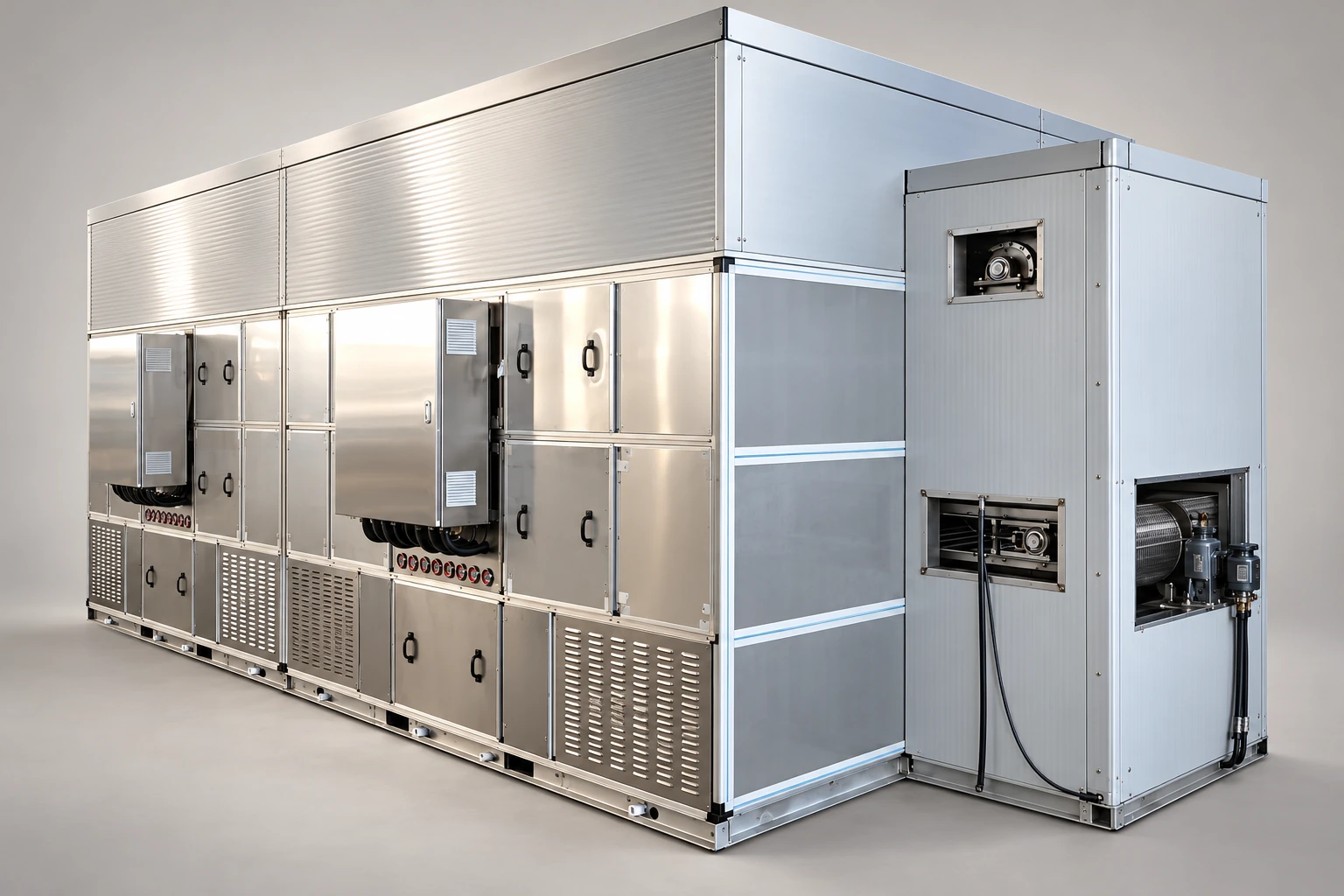
In the NTKS series supplied by KISEI SHOJI, dewatered sludge is formed, fed onto a belt and dried by circulating air. The air returns to the chamber after cooling, dehumidification and reheating. Check the condensate connection, sealing at the feed and discharge points, and any odour controls required for the feedstock.
Supply air temperature is measured as air enters the drying chamber. Return air temperature is measured after the air has taken up moisture from the sludge. Sludge temperature depends on heat exchange and evaporation. When comparing tests, align measurement locations, air temperature and humidity, airflow, feed rate and bed depth.
03Comparison with high-temperature drying
High-temperature dryers can use hot air, steam or heated surfaces. Heat supply and exhaust or vapour treatment depend on the design. Where steam or waste heat is available, check its temperature, availability by operating hour and usable quantity.
Compressors and fans in a heat pump dryer consume electricity. Compare metered kWh per kg of water removed at the same inlet and outlet moisture levels and with the same equipment included in the measurements. For cost comparisons across technologies, include fuel, steam or waste heat costs and auxiliary power. Align the time periods used for start-up and cleaning as well.
References Yuan & Chu, Heat pump drying of industrial wastewater sludge
Equipment shown for reference.