Water Treatment & Sludge Dewatering
COLUMN 01Screw Press Selection & Operation: DS Loading, Flocculation & Solids Capture
We will explain how to evaluate a stacked screw press based on the relationship between agglomeration and back pressure conditions, and cake Moisture Content and Solids recovery rates, with the throughput measured in terms of DS load.
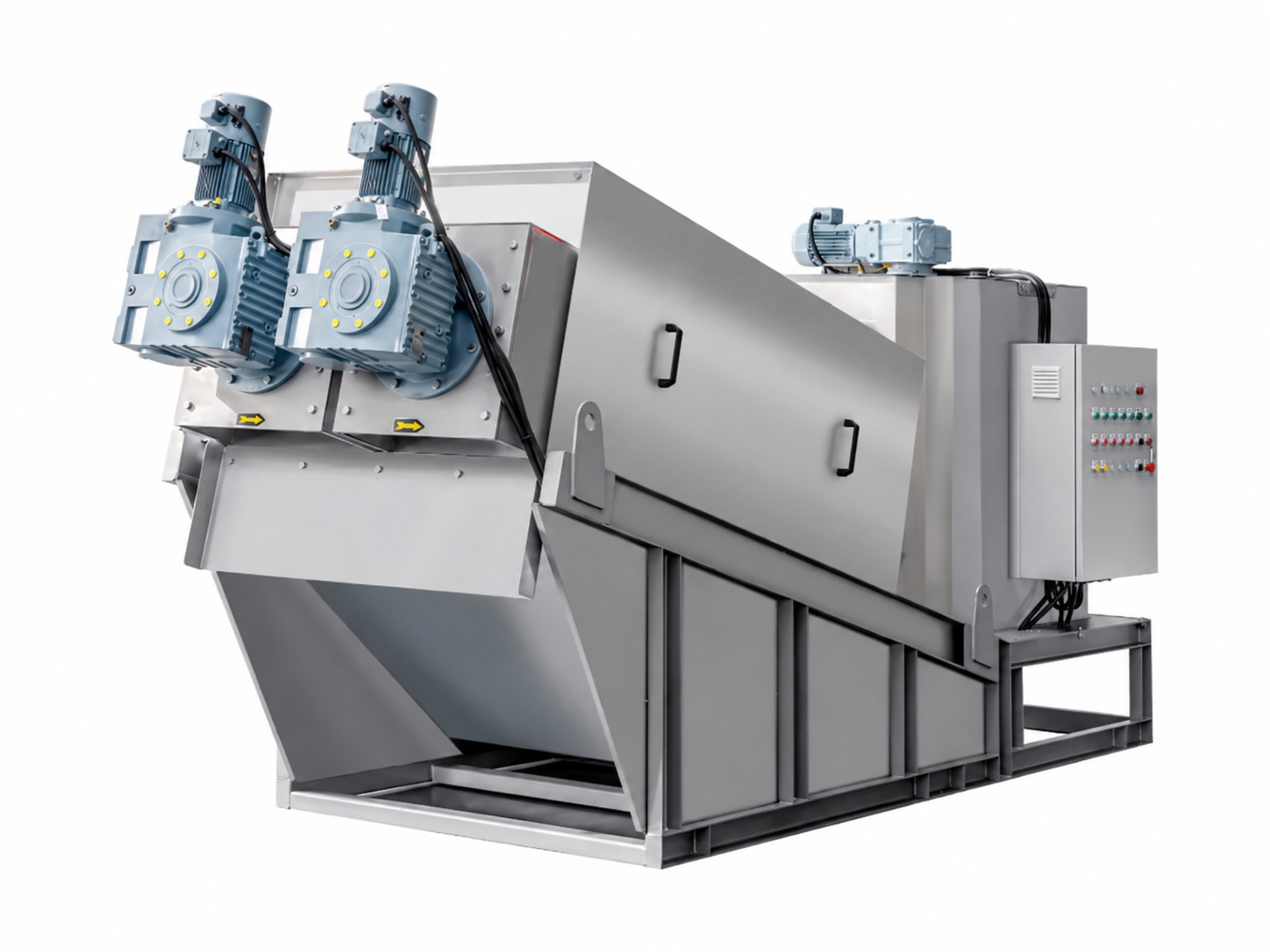
Selecting a multi-disc screw press requires a combined assessment of sludge feed flow, hourly dry solids loading, flocculation and cake moisture. Solids lost in the filtrate must also be measured to assess overall treatment efficiency. This article explains ring-based dewatering and the indicators used for selection and operating assessment.
Contents of this article
- 01Separates water while transporting sludge
- 02Adjust coagulation conditions before dewatering
- 03Even self-cleaning structures require inspection and cleaning.
- 04Treatment capacity is determined by both the amount and solid content of sludge.
- 05Evaluate moisture content and recovery rate using material balance
- 06Before introduction, conditions must be aligned from entrance to exit.
01Separates water while transporting sludge
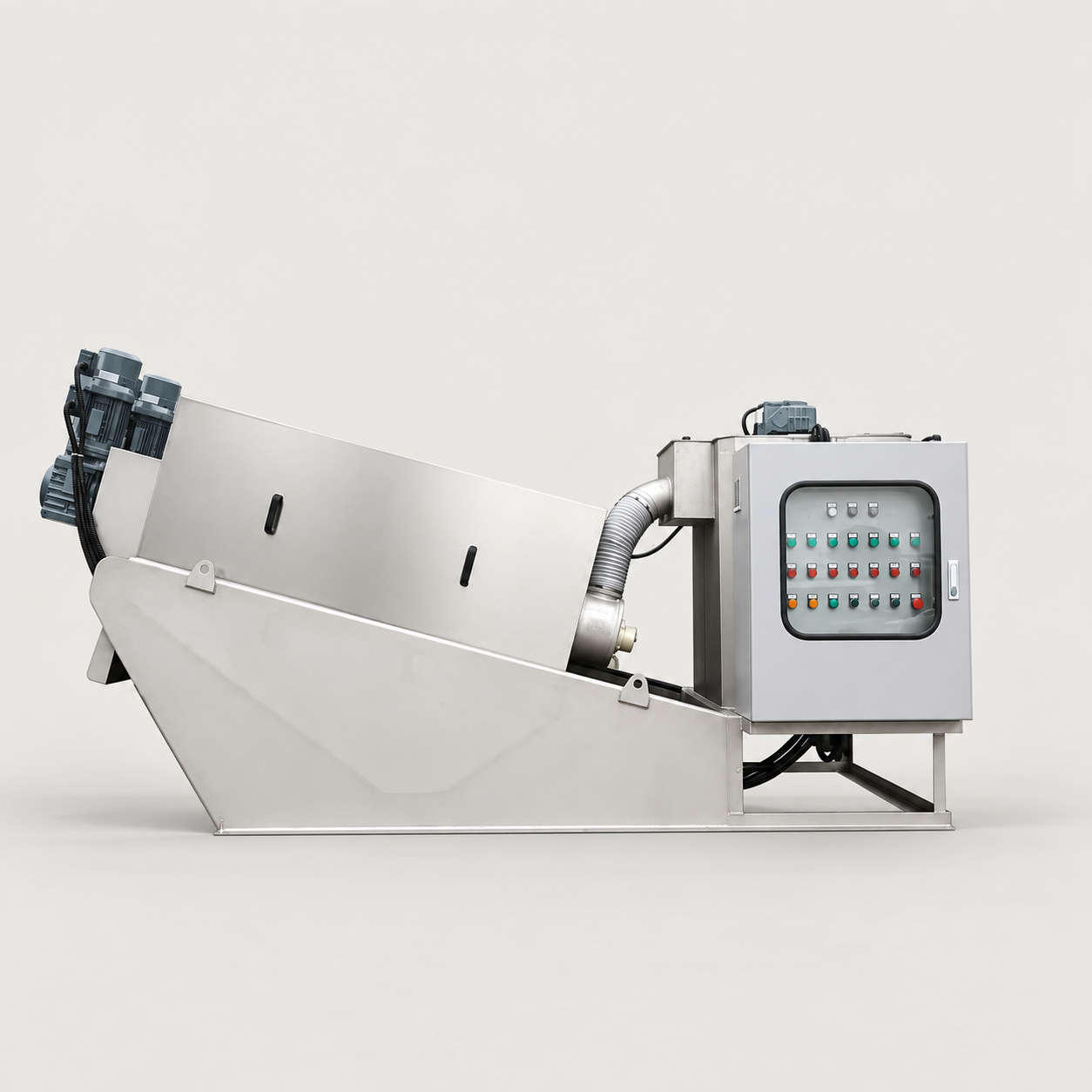
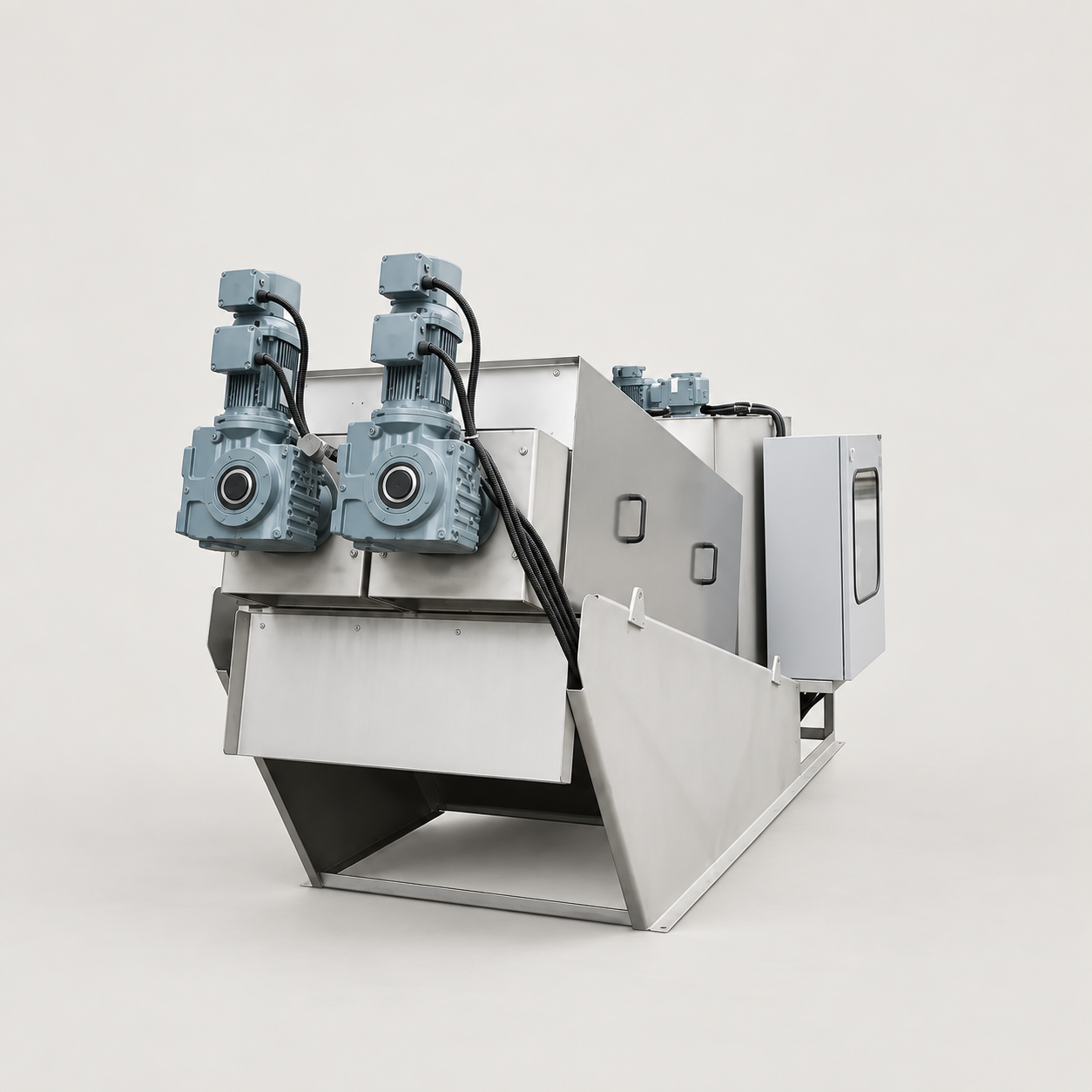
A multi-disc screw press comprises a filtration section of alternating fixed and moving rings, a screw shaft running through it, and an outlet back-pressure plate. The rotating screw conveys sludge toward the outlet while water drains through the gaps between rings. The separated liquid is collected as filtrate and the retained solids leave as dewatered cake.
The dewatering mechanism varies along the machine. The first section mainly removes free water to thicken the sludge; the later section dewaters it through conveying pressure and outlet back pressure. Continuous thickening and compression within one machine are characteristic of this design.
02Adjust coagulation conditions before dewatering
The basic sequence is raw sludge feeding, flocculation and mixing, thickening, compression dewatering and cake discharge. Polymer flocculants or other chemicals gather fine particles into flocs. Because floc condition affects drainage in the later stages, assess the press and chemical conditioning together.
The same machine can give different results depending on the sludge source, solids concentration, oil content, chemical type and dose. Adding more flocculant does not necessarily improve performance. Use tests with the actual sludge or existing operating data to confirm a suitable combination.
A more dilute sludge requires greater liquid flow for the same solids load. Conversely, a higher concentration changes pumping and mixing requirements. Establishing the actual concentration range helps assess the feed and flocculation equipment as well as the press itself.
03Even self-cleaning structures require inspection and cleaning.
Relative movement between the moving and fixed rings helps limit blockage of the filtration gaps. Self-cleaning does not mean that fouling never occurs or that routine cleaning is unnecessary. Continue checking wash-water conditions, filtrate drainage, deposits and the drive system.
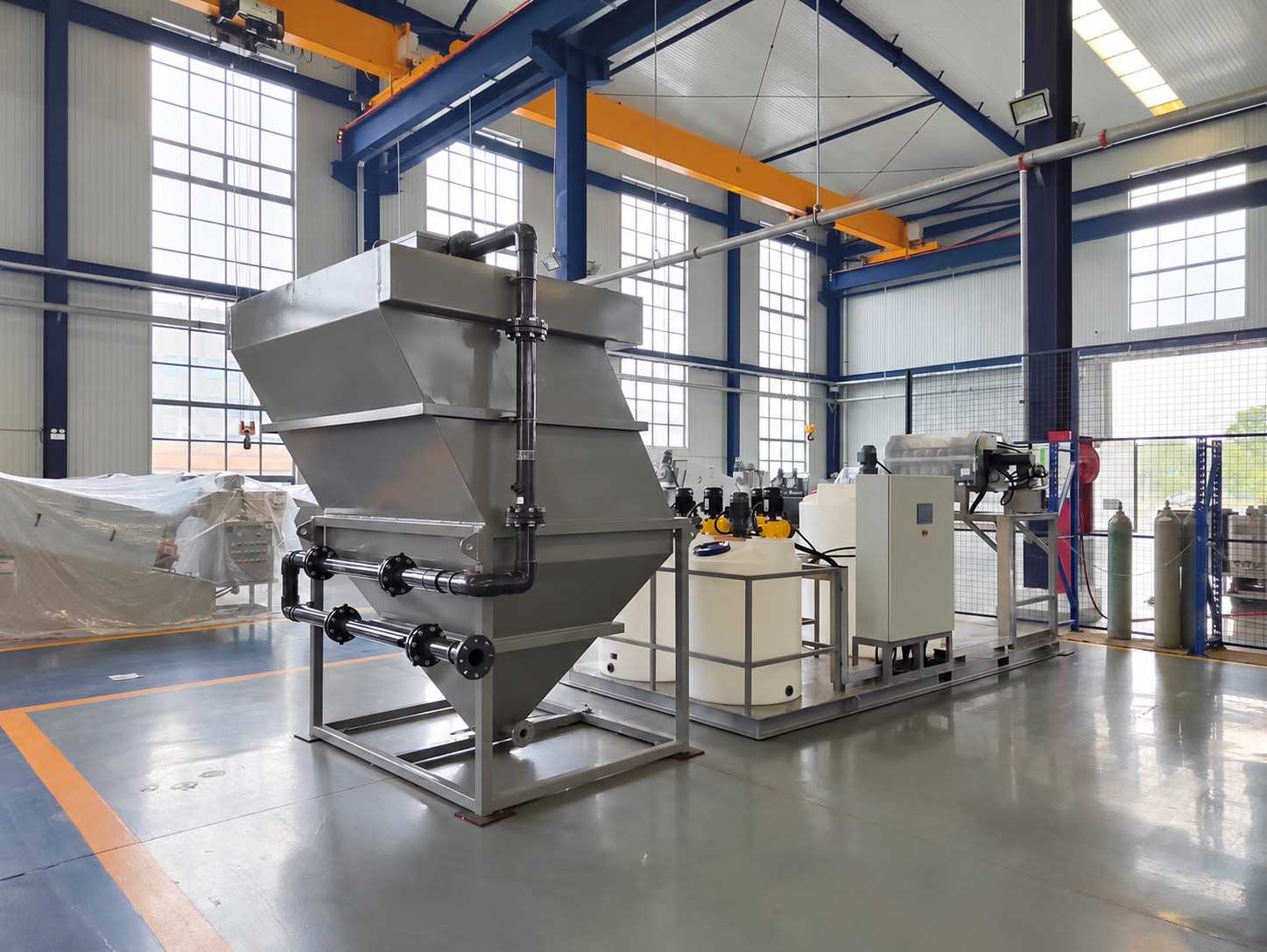
Continuous operation requires coordination with the sludge feed pump, chemical dosing unit and cake handling equipment. Automating the press alone will not sustain operation if the receiving container fills or polymer solution runs out. Define shutdown conditions and restart procedures for the complete system.
04Treatment capacity is determined by both the amount and solid content of sludge.
Distinguish sludge feed flow in m³/h from dry solids loading in kg-DS/h. DS means dry solids, excluding water. Equal sludge volumes at different concentrations impose different solids loads on the press. Confirm concentration and operating hours rather than selecting a model by flow alone.
For example, a feed flow of 2 m³/h at 10 kg-DS/m³ gives a solids load of 20 kg-DS/h. This illustrates load calculation and does not establish model suitability or guarantee cake moisture. Account for peak sludge-generation periods as well as average conditions.
Compare cake moisture under consistent sludge and chemical dosing conditions. At the same moisture content, different solids can still vary in adhesion and conveyability. Define the required condition for disposal or acceptance by a downstream dryer to clarify the purpose of the installation.
05Evaluate moisture content and recovery rate using material balance
Let F be feed dry solids loading and K the dry solids recovered in the cake. Solids capture is η = K/F. With η expressed as a decimal and cake moisture w as a mass fraction, wet cake mass is approximately M = Fη/(1 − w). This is a steady-state balance that neglects solids contributed by added chemicals and similar effects.
At F = 20 kg-DS/h, η = 0.95 and w = 0.80, wet cake is approximately 95 kg/h. With the same recovered DS at 82% moisture, it is approximately 106 kg/h. Small moisture differences affect transport mass, so compare moisture and recovered DS together. These figures are illustrative, not equipment guarantees.
Solids capture can also be assessed from feed and filtrate flows and solids concentrations. If wash water enters the filtrate, concentration alone cannot establish the solids loss. Align sampling locations, times and flow measurements, and include any added water in the balance where necessary.
Back pressure should not be optimized in isolation. Changes in feed DS, flocculation or screw speed affect conveying and discharge. Record processed DS, capture rate, drive load and discharge stability as well as cake moisture, and evaluate operation within the model's permitted range.
06Before introduction, conditions must be aligned from entrance to exit.
For an inquiry, gather sludge type and quantity, solids concentration, desired operating hours, target cake condition and current chemical dosing conditions. At the installation site, check equipment dimensions, delivery access, electrical and wash-water supplies, filtrate disposal and cake removal arrangements.
If drying or another process follows dewatering, please provide its acceptance conditions. KISEI SHOJI can help select a multi-disc screw press based on the sludge and surrounding equipment. You can contact us with the information available even before all analysis results are ready.
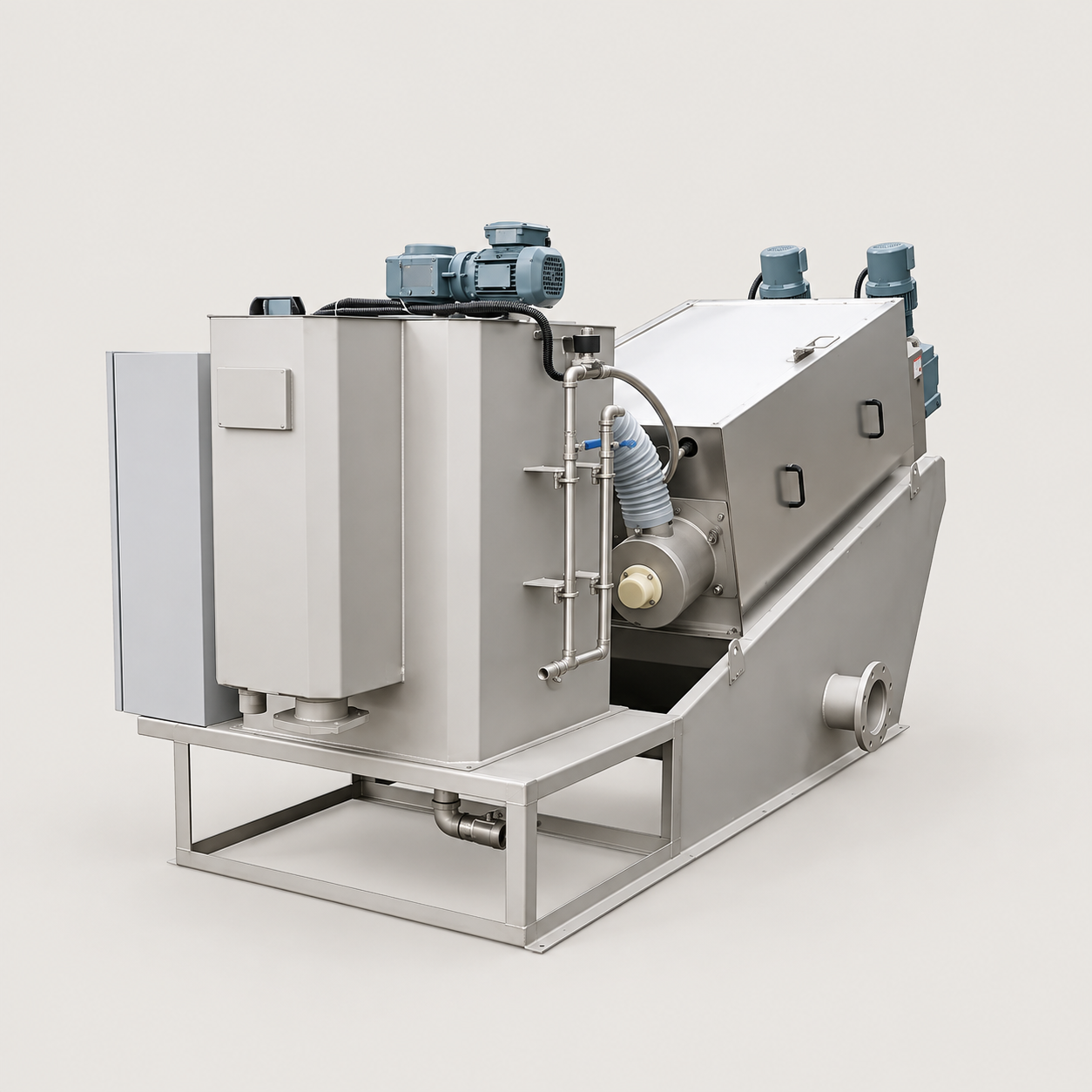
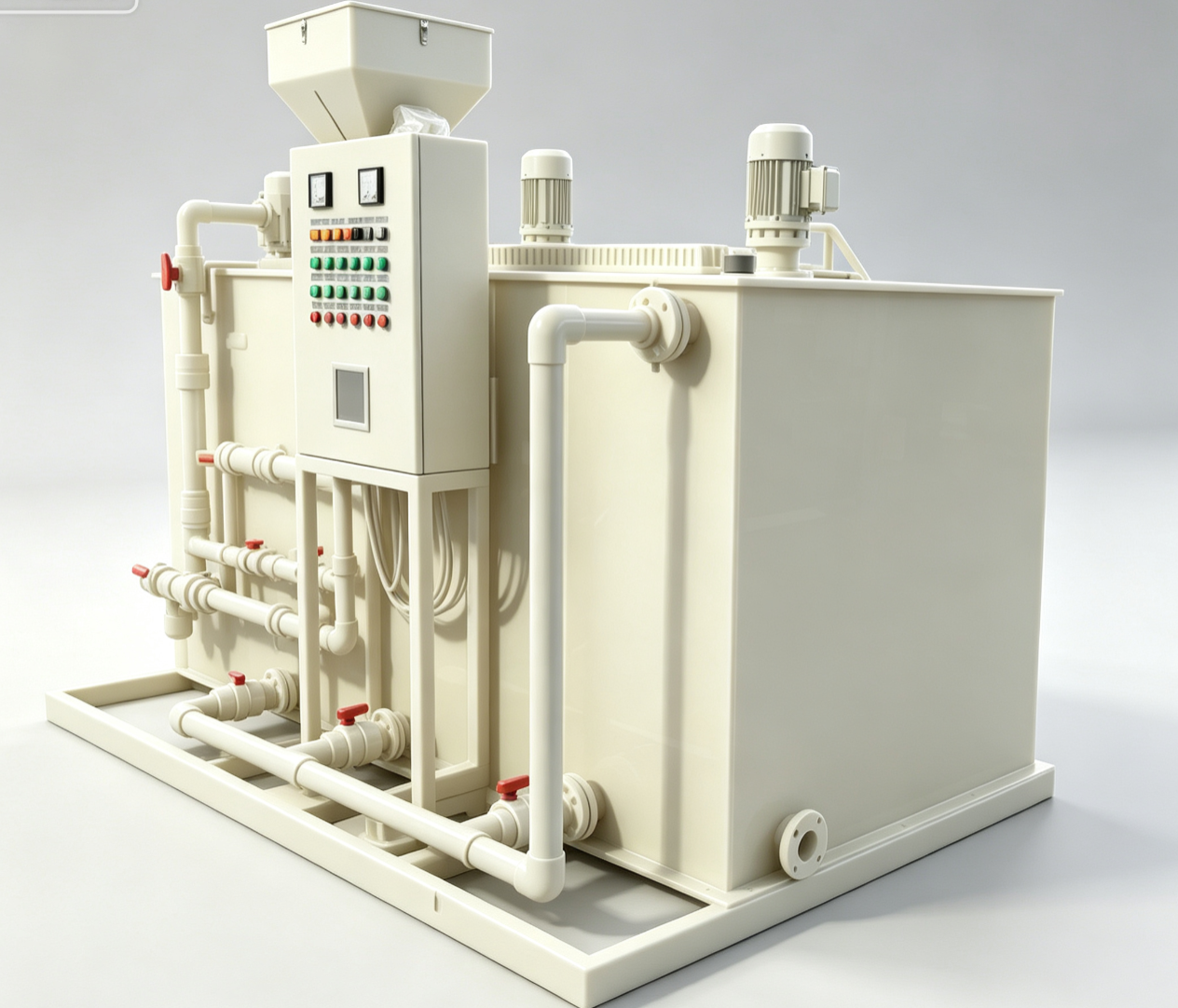
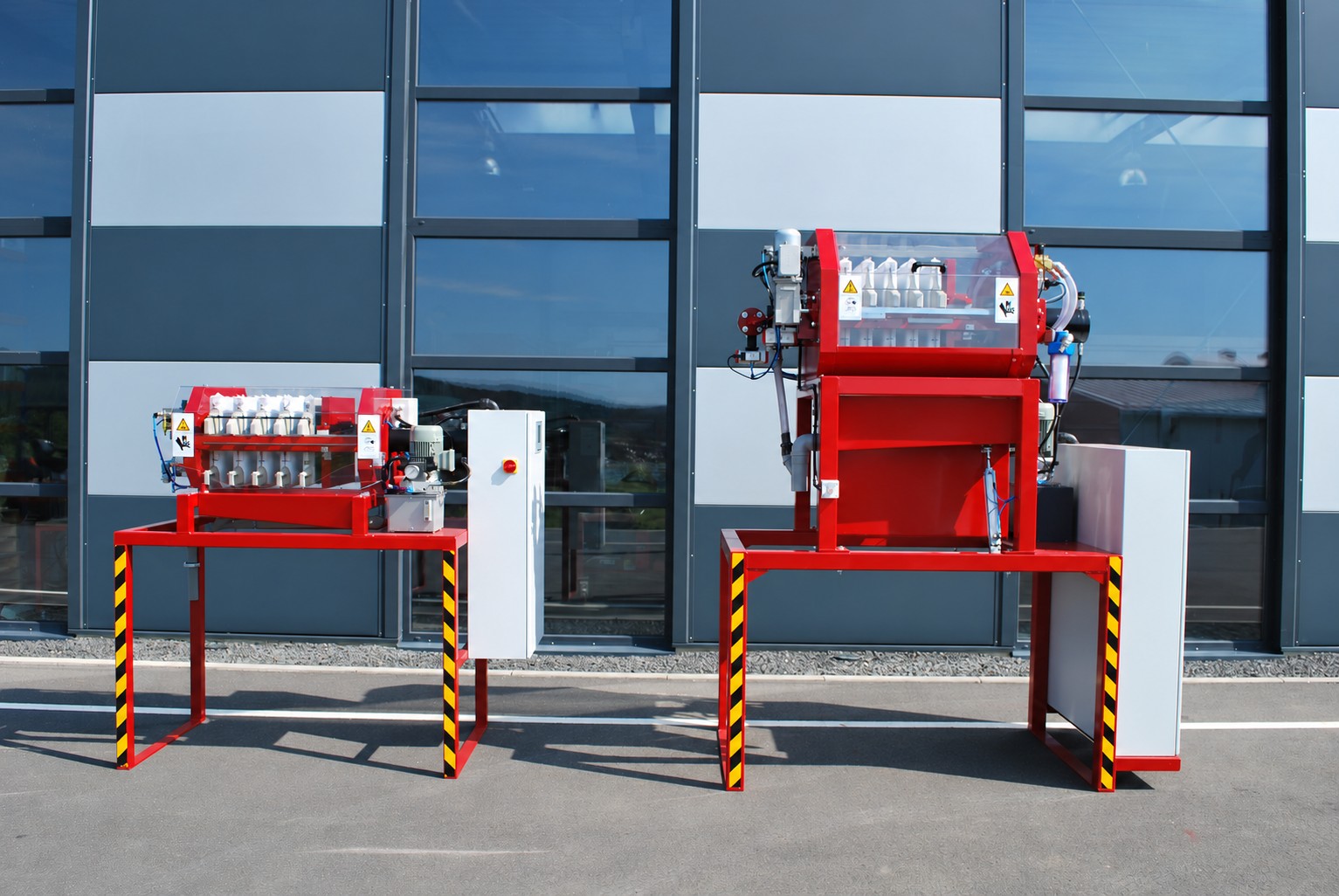
Photos are for reference of appearance and configuration. Partial enlargements are displayed from the same image. It does not indicate individual delivery results or standard delivery scope.