Drying/Carbonization Equipment
COLUMN 11How Extrusion Affects Heat Pump Sludge Drying: Uneven Drying and Safety Checks
Find out why sludge clumps on mesh belts, how to check bed depth, airflow and residence time, and when to assess gas and dust hazards.
Contents of this article
01Why extrusion affects drying
A mesh-belt dryer can use an extruder to form dewatered cake into strands before feeding it onto the belt. Gaps between strands provide airflow paths and expose more surface to the circulating air. Moisture evaporates at the surface while water inside moves towards it. Strand thickness and bed depth therefore affect drying.
02How clumps cause uneven drying
Our technicians focus on what happens after the strands drop from the extruder onto the belt. Strands that look intact at the die can break, flatten or stick together, depending on moisture and consistency. A clump has less exposed surface and a longer path for moisture to move from the centre.
When bed depth varies, air can favour paths of lower resistance. Moisture may remain in thicker regions and clump cores. Sample across the belt width at discharge and compare the surface and centre of larger clumps alongside the average moisture reading.
03What to check before adjusting temperature
Check upstream cake moisture and consistency, then inspect strand shape both at the die and on the belt. Review feed rate and distribution across the belt, and compare belt fouling, airflow, belt speed and residence time with the operating log. Record changes one at a time to identify their effects on drying uniformity.
04Safety note: flammable gases and dust
Some organic or industrial sludges containing volatile compounds can release gases during storage or drying. For dust generated during discharge and transfer, assess combustibility and the conditions under which dust can disperse or accumulate. Gas hazards depend on composition, concentration, oxygen and ignition sources. A recirculating design also calls for assessment of gas accumulation and dust retention.
Use feedstock analyses and representative samples to review normal operation, start-up, shutdown, cleaning and upset scenarios. The design risk assessment determines whether gas monitoring, ventilation, dust collection and ignition control are required.
References HSE, Risks from sewage sludge drying plants
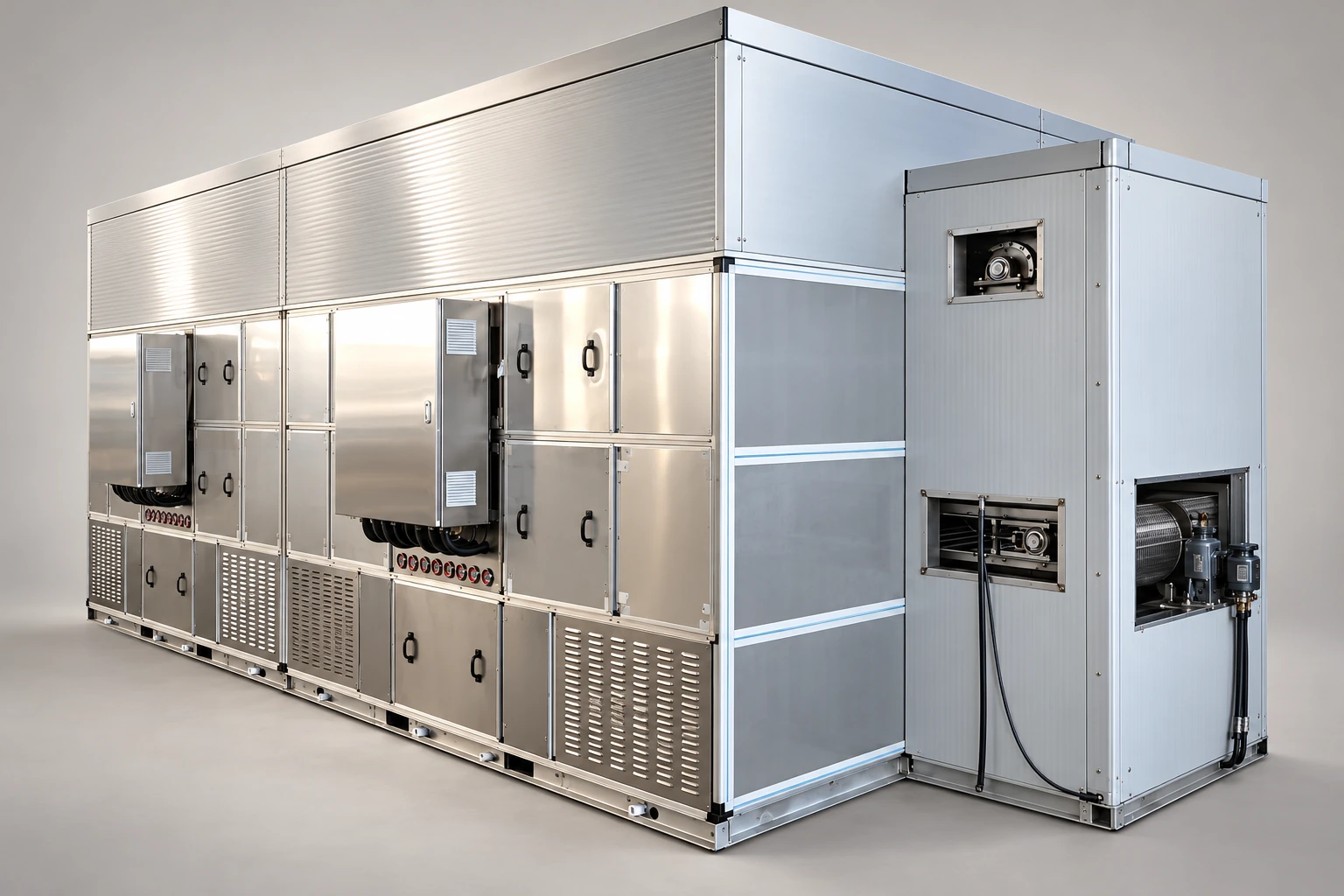
Equipment shown for reference.