Drying/Carbonization Equipment
COLUMN 08What Types of Sludge Can a Sludge Dryer Handle? Drying Organic and Inorganic Sludge
Learn how stickiness, particle size and dust formation affect dryer selection and target moisture content for sludge from food processing, sewage treatment, ceramics and metalworking.
Contents of this article
01Drying conditions depend on the sludge
Low-temperature heat pump dryers remove water from sludge to reduce its mass and volume, potentially lowering transport and disposal costs. Alongside the organic or inorganic classification, check particle size, composition, variations in moisture content, adhesion and the condition of the dried material. Even within one industry, the wastewater source and the conditioning and dewatering steps can change cake properties.
02Stickiness, adhesion and odour in organic sludge
Organic-rich sludge from food processing or sewage treatment can be sticky enough to affect feeding, conveying and cleaning. Large lumps may dry at the surface while retaining water in the centre. If sludge adheres to the feed section or mesh belt, check the residue after operation and the time required for cleaning.
Depending on the composition, drying may release odorous or volatile compounds. Review the sludge source and composition when setting controls for the chamber, feed and discharge points, and condensate outlet.
03Dust formation and target moisture in inorganic sludge
Fine particles in sludge from ceramics production, stone processing and metalworking may break away as dried material is discharged or transferred to a container. Metalworking sludge may also contain abrasives or metalworking fluids, so check both the main solids and any contaminants.
Set the target moisture based on the receiving facility's requirements, ease of storage and the likelihood of dust during discharge and transfer. The moisture content at which material breaks up varies by sludge. Test several outlet targets and use the same transfer conditions to compare how readily the dried material crumbles.
04What to check before selecting a dryer
Record the sludge source, daily load, peak feed rate, range of inlet moisture and outlet acceptance criteria. For a mesh-belt dryer, test actual sludge for shape retention after dropping onto the belt, adhesion, surface and core moisture, and dust at discharge. If sludge properties vary between production days, assess representative samples and difficult-to-process samples separately.
KISEI SHOJI can discuss dryer configurations for your sludge and the conditions of existing dewatering equipment.
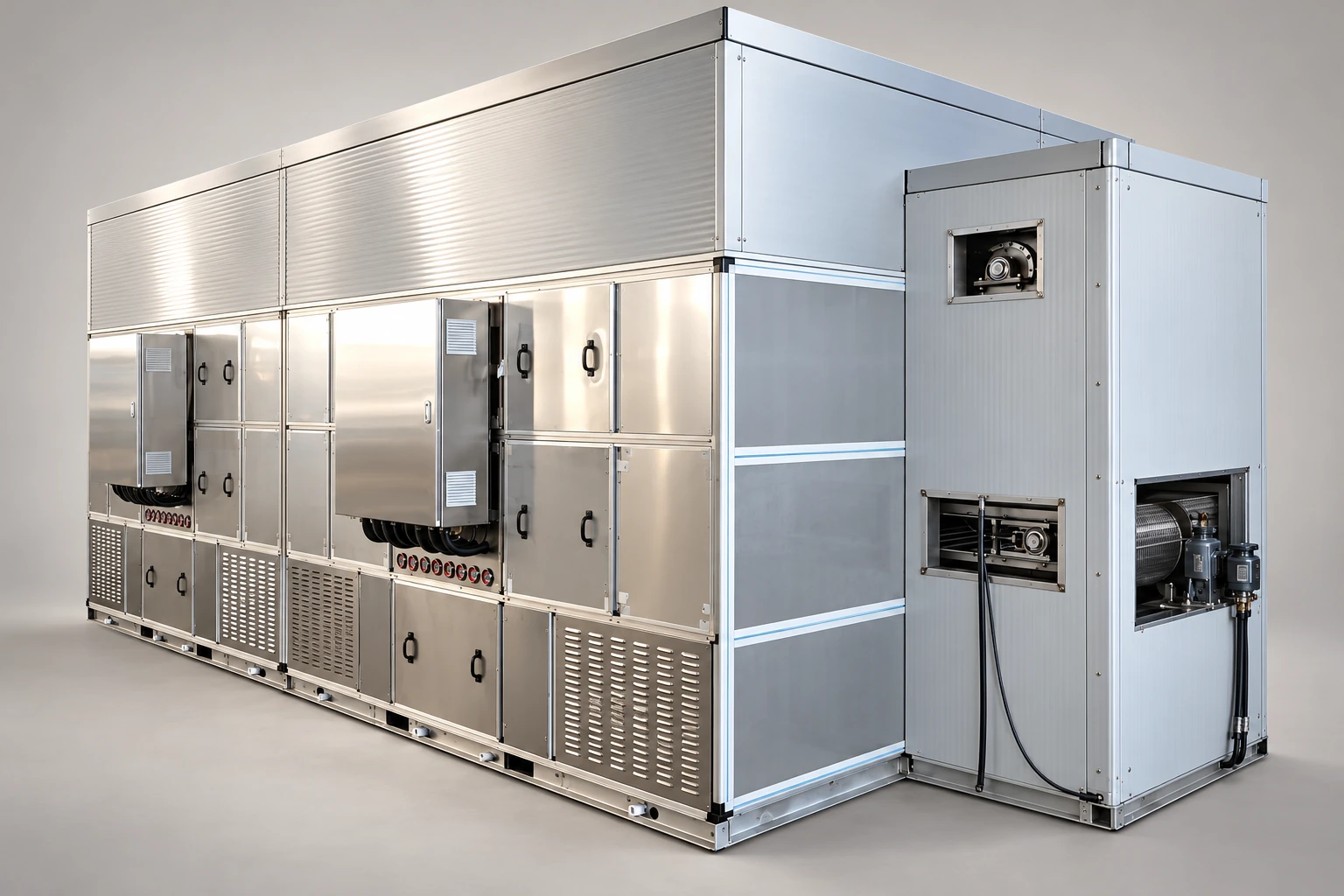
Equipment shown for reference.