Sedimentation separation using inclined tube
This method secures the sedimentation area with multiple inclined pipes. Separation performance varies depending on the particle size of suspended matter, sedimentation properties, and inflow conditions.

WATER TREATMENT SERIES
LAMELLA CLARIFIER
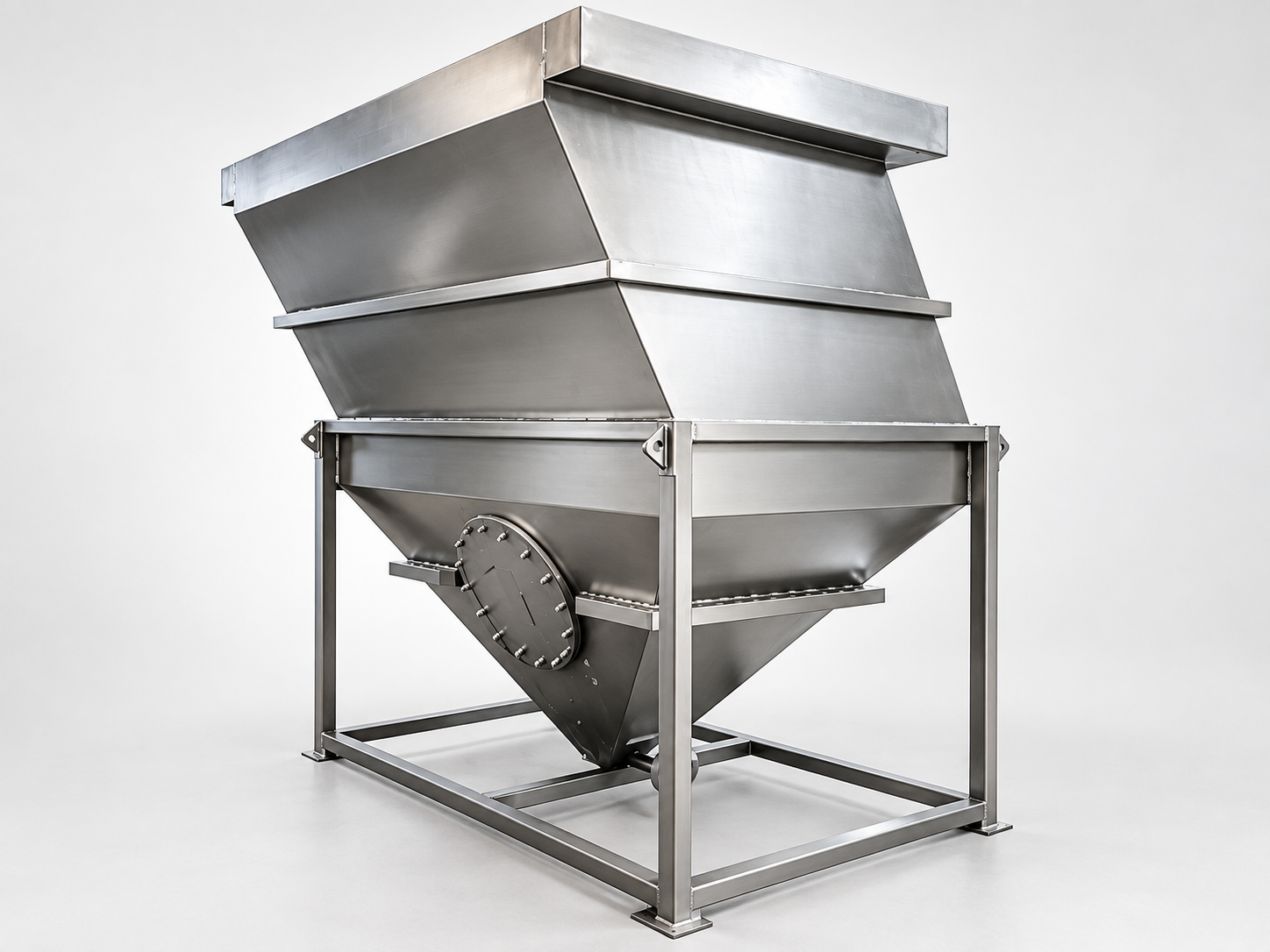
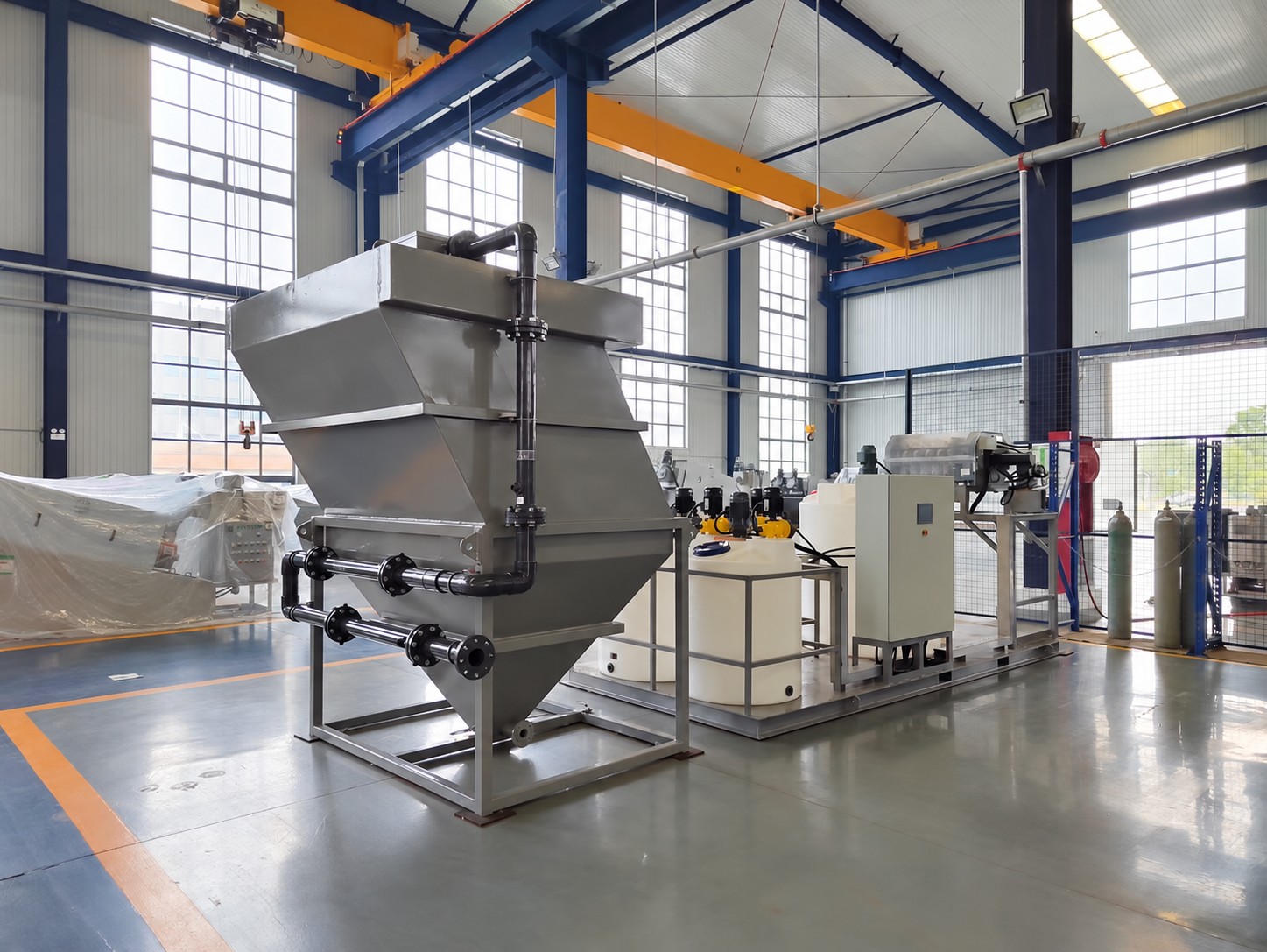
Equipment that secures a settling area with inclined pipes and separates suspended solids in wastewater.
You can compare all 8 models based on reference throughput, dimensions, and connection diameter.
Product overview
The NTC series uses inclined tubes to separate suspended solids from water by sedimentation. Eight models are listed, with reference flow capacities of approximately 5–100 m³/h. Selection requires a review of flow, water quality and sludge discharge, together with the upstream and downstream equipment.
When considering a model, we check not only the required treatment volume, but also the SS concentration and sedimentation properties of the raw water, as well as the target water quality.
PROCESS & STRUCTURE
Below is the basic flow of inclined tube precipitation separation. Depending on the raw water, pretreatment and coagulation conditions may need to be confirmed.
FEATURES
This method secures the sedimentation area with multiple inclined pipes. Separation performance varies depending on the particle size of suspended matter, sedimentation properties, and inflow conditions.
The supernatant treated water and settled sludge are sent to separate processes. We will consider equipment before and after the process, including reuse of treated water and sludge dewatering.
Specify the diameter of the inlet, treated water outlet, and sludge outlet. In addition to the installation area of the tank, check the space for piping, inspection, and mud removal.
SPECIFICATIONS
Check the approximate water volume and body dimensions, and compare the connection conditions for inflow, drainage, and mud removal. The table can be scrolled horizontally.
Showing 8 models
| model | Reference processing amount m³/h | External dimensions L×W×H mm | Water inlet DN | Drain port DN | Mud removal port DN | specifications | comparison |
|---|---|---|---|---|---|---|---|
| NTC10 | About 5 | 2,000 × 1,100 × 2,200 | 50 | 50 | 50 | ||
| NTC20 | About 10 | 2,000 × 2,000 × 2,600 | 80 | 80 | 50 | ||
| NTC30 | About 15 | 2,500 × 2,000 × 2,600 | 100 | 100 | 50 | ||
| NTC40 | About 20 | 3,000 × 2,000 × 2,900 | 100 | 100 | 50 | ||
| NTC60 | About 30 | 3,100 × 2,700 × 2,900 | 100 | 150 | 50 | ||
| NTC100 | About 50 | 4,900 × 2,800 × 3,000 | 100 × 2 | 150 | 50 × 2 | ||
| NTC150 | About 75 | 6,800 × 2,900 × 3,800 | 100 × 2 | 200 | 50 × 2 | ||
| NTC200 | About 100 | 7,500 × 3,200 × 3,800 | 100 × 2 | 250 | 50 × 2 |
There are no applicable models. Please change your search conditions.
Flow capacities are reference values for model selection. Actual performance varies with SS concentration, particle settleability, flocculation and flow fluctuations. Dimensions describe the equipment body and exclude piping, maintenance and access space. Select construction materials to suit the water quality and operating conditions.
MODEL COMPARISON
If you check "Compare" in the specification table above, you can check up to 3 models side by side.
Please select the model to compare.
APPLICATIONS
Suitability depends on the material and operating conditions. The applications listed are examples for evaluation, not records of individual installations or evidence of treatment performance.
MODEL SELECTION
Please let us know the raw water generation process, average/maximum water volume, SS concentration, target water quality, and installation conditions. Even if you do not have all the analytical values, you can consult with us based on the information we know.
When combining both types of equipment, check the balance between the volume of sludge, sludge concentration, storage method, and dewatering capacity.
CONFIGURATION
We check not only the equipment itself, but also the peripheral equipment necessary for operation. The standard scope of delivery and additional configurations will be explained individually at the time of consultation.
Check the tank body, inclined pipes, and collection and discharge routes for treated water.
Check raw water supply, flow rate adjustment, and coagulation process as required.
Check the sludge removal method, sludge storage/dewatering, and downstream equipment for treated water.
PRODUCT MATERIALS
This page lists the main specifications of all 8 models. If you require drawings or detailed configuration data, please contact us with the model you are considering and the conditions of use.
Inquire about product documentationFAQ
The main target is suspended matter that settles in water. Solid-liquid separation is performed using an inclined tube. Since the equipment does not uniformly remove dissolved components and fine particles that do not sink easily, pre-treatment and post-treatment will be considered depending on the water quality.
Varies depending on particle size and sedimentation properties of raw water. If separation is difficult due to natural sedimentation, it is necessary to check the coagulation conditions, etc. Please let us know if you have any current treatment methods or sedimentation test results.
The required water quality varies depending on the reuse destination. We check the raw water and target water quality, including components other than SS, and consider additional treatment if necessary. We do not guarantee suitability for reuse or discharge.
In addition to the external dimensions of the main unit, space is required for piping, inspection, cleaning and removal of inclined pipes, mud removal, and transportation. Check the layout including peripheral equipment.
Lamella Clarifier mainly separates suspended matter in water by sedimentation, and Filter Press is equipment that filters and dewaters sludge to form a cake. When combining the two, check the balance between the volume and concentration of sludge and the dewatering capacity.
CONTACT
Please provide the wastewater source, average and peak flow, SS concentration, target water quality and installation conditions. You can contact us with the information currently available, even if analysis results are incomplete. Selecting a model-specific inquiry button adds that model to your message.